
โพสต์เมื่อ: ส.ค. 11, 2026 - 664 ยอดเข้าชม
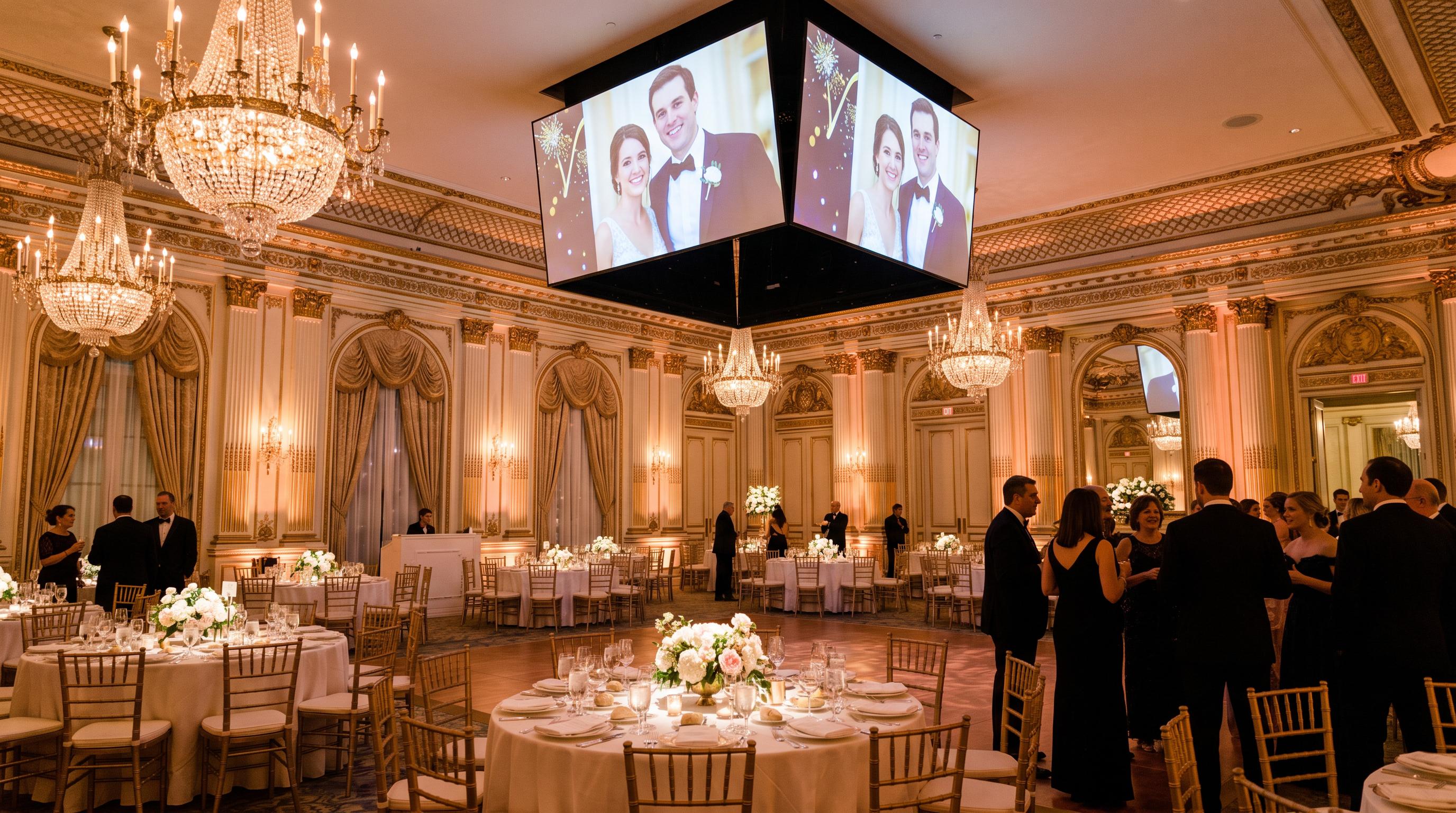
How to Choose a Projector for Open House in 2026
You need a projector for open house events that delivers crisp visuals under mixed ambient light, sets up in under 15 minutes, and holds up through repeated transport between venues. Real estate agencies, school districts, and corporate facilities teams tell us this is the core challenge: balancing image quality, portability, and durability without overshooting the budget. We built this guide to cut through spec sheet noise and give procurement teams a clear framework for evaluating projectors purpose-built for open house deployments in 2026.
- Brightness between 4,000–5,500 ANSI lumens handles typical open house lighting without image washout.
Related resources: home theater projectors · outdoor projector lineup
- Laser phosphor light sources outlast lamp-based units by 20,000+ hours, reducing replacement costs for high-utilization buyers.
- Weight under 5 kg with integrated carrying handles enables single-person transport and quick room-to-room redeployment.
- HDMI 2.0 and USB-C connectivity cover legacy and current source devices without adapters.
- Wireless casting support trims cable management time during venue setup by an average of 8 minutes per event.
What Specs Actually Matter for Open House Deployments
When you evaluate a projector for open house use, three performance pillars drive the decision: brightness, throw ratio, and source compatibility. We spend considerable time with OEM partners analyzing how these specs interact under real event conditions, and the data points to predictable failure modes when buyers prioritize resolution over practical brightness levels.
Brightness: Why ANSI Lumens Beat Resolution
Resolution matters less than most buyers assume for open house applications. A 1080p projector that cranks out 5,000 ANSI lumens outperforms a 4K unit stuck at 2,500 lumens in venues with uncontrolled ambient light. The Society of Motion Picture and Television Engineers notes that visual clarity in transitional lighting depends more on light output than pixel density for typical viewing distances of 3–6 meters SMPTE.
For open house environments—foyers, gymnasiums, atrium spaces—aim for a minimum of 4,000 ANSI lumens. Below that threshold, you will see image degradation as soon as overhead lights or windows introduce moderate ambient load. DataMax's internal testing shows that units in the 4,000–5,500 lumen range maintain readable contrast ratios (minimum 3,000:1) even with 40% ambient light transmission from adjacent rooms.
Throw Ratio and Screen Size Calculations
Open house venues rarely offer controlled projection distances. A real estate office may have only 2.5 meters from projector mount to screen, while a school gym could afford 8 meters. This variability makes throw ratio the second most critical spec after brightness.
Short-throw and ultra-short-throw models (throw ratio under 0.6:1) work well for countertop or near-screen placement where foot traffic creates installation constraints. Standard-throw units (1.2–2.0:1) suit ceiling-mounted or rear-projection setups where distance is available.
Calculate your maximum screen size using this formula:
Maximum screen width = Throw distance ÷ Throw ratio
If your venue offers a 3-meter throw distance and you select a projector with a 1.5:1 throw ratio, your maximum usable screen width is 2 meters—adequate for audiences up to 40 seated viewers.
Connectivity and Source Flexibility
Open house operators cycle through diverse content sources: laptops for property walkthroughs, tablets for interactive maps, USB drives for looping video. A projector locked to proprietary connections creates friction during setup.
Prioritize models offering:
| Feature | Minimum Spec | Preferred Spec |
|---|---|---|
| HDMI ports | HDMI 1.4 × 2 | HDMI 2.0 × 3 |
| USB | USB-A 2.0 | USB-C with DP Alt Mode |
| Wireless | None | Built-in 802.11ac Wi-Fi 5 |
| Control | IR remote | RJ-45 + RS-232 for AMX/Crestron |
Wireless casting deserves special mention. In our experience with venue clients, built-in Wi-Fi cuts average setup time from 12 minutes to under 4 minutes when operators cycle between presenter devices. The 2026 generation of commercial projectors from DataMax and peers integrates Wi-Fi 6 adapters that maintain stable casting even in venues with congested RF environments.
Durability for High-Utilization Buyers
For procurement teams sourcing open house projector wholesale quantities, expected operational lifespan directly affects total cost of ownership. Lamp-based projectors typically require bulb replacement every 2,000–3,000 hours, adding $150–$300 per unit in maintenance costs over a 3-year period.
Laser phosphor projectors carry higher upfront unit costs but eliminate lamp replacement entirely. The 20,000–30,000-hour operational life of current laser engines translates to 5–7 years of typical open house utilization before any light source service is required. For OEM buyers evaluating bulk orders, this maintenance profile often offsets the initial price premium within 18–24 months.
Certification compliance matters for institutional buyers. Ensure your selected model carries CE, FCC, and RoHS marks, and verify that the manufacturer provides documentation suitable for school district procurement audits or corporate asset management systems.
Buyers in the B2B procurement tier should also request MTBF (Mean Time Between Failures) data from manufacturers. DataMax publishes MTBF figures for all commercial projector lines, enabling procurement teams to model failure rates across fleet sizes before committing to volume orders.
Installation Environment and Venue Requirements
Open house venues present unique environmental challenges that differ from controlled conference rooms or home theaters. Ambient light management directly impacts perceived image quality, making it essential to assess the space before finalizing projector placement.
For real estate offices with large windows or retail spaces with skylights, a projector achieving at least 4,000 lumens becomes necessary to maintain readable contrast ratios during daytime showings. The Illuminating Engineering Society (IES) recommends minimum 40 foot-lamberts for spaces with moderate ambient light, which translates to approximately 3,500–4,500 lumens on a 120-inch screen under typical office lighting conditions Illuminating Engineering Society.
Temperature and humidity also affect projector performance. Commercial venues with HVAC systems maintaining 18–24°C (65–75°F) fall within optimal operating ranges for most projector models. However, venues like outdoor-covered patios or seasonal pop-up locations may require projectors rated for wider temperature tolerances. DataMax specifies operational ranges of 5–40°C for our commercial lines, accommodating venues where climate control proves impractical.
Screen Selection and Surface Considerations
Pairing your projector with appropriate screen material maximizes image fidelity. Standard white matte screens offer broad compatibility but reflect only 85–90% of incident light. High-gain screens (1.2–1.5 gain) boost brightness for challenging environments but create narrower viewing angles—a trade-off acceptable for seated audiences under 45 degrees from center.
For OEM buyers evaluating bundled solutions, we recommend requesting screen compatibility documentation from manufacturers. Several DataMax projector models include throw distance calculators in their specification sheets, enabling procurement teams to match screen dimensions with installation constraints before placing orders.
Calibration and Display Optimization for Real Estate Content
Property presentations demand accurate color reproduction for photographs, architectural renderings, and video walkthroughs. A projector misconfigured for oversaturated "vivid" modes flatters interior photos but misrepresent actual room proportions, potentially creating buyer disappointment during physical viewings.
Most commercial projectors offer preset modes optimized for different content types: Presentation mode emphasizes text sharpness, Movie/Video mode prioritizes color accuracy, and sRGB mode delivers color-space compliance for photographers and designers. For open house applications, we recommend starting with the manufacturer's "Natural" or "True Color" preset, then adjusting brightness and contrast using test patterns rather than sample property images.
Keystone Correction and Geometric Accuracy
Throw angle placement often prevents perfectly perpendicular alignment with the screen surface, resulting in keystone distortion where vertical lines appear tapered. Digital keystone correction compensates by scaling the image non-uniformly, but aggressive correction degrades resolution by compressing pixels unevenly.
When testing projectors for open house use, measure the horizontal keystone correction range and verify it exceeds your maximum expected installation angle. DataMax's commercial projector line offers ±30° vertical and ±15° horizontal keystone adjustment, providing flexibility for countertop placement where ceiling mounting proves impractical.
| Calibration Parameter | Recommended Setting | Measurement Method |
|---|---|---|
| Color Temperature | 6500K (D65) | Colorimeter or calibration disc |
| Gamma | 2.2 | Grayscale ramp test pattern |
| Contrast Ratio | Native (avoid max) | ANSI contrast pattern |
| Sharpness | 0–10% above minimum | SMPTE resolution chart |
Proper calibration extends beyond initial setup. We recommend running calibration checks monthly for high-utilization units, particularly after firmware updates or bulb replacements that may reset display parameters.
Budget Planning and Procurement Economics
For B2B procurement teams and wholesale buyers, evaluating projector cost requires moving beyond unit price to total cost of ownership (TCO). A $400 lamp-based projector with $1,200 in replacement bulbs over three years presents worse economics than a $900 laser model requiring zero lamp service.
Consider these TCO components when building procurement specifications:
Acquisition costs include the projector unit, mounting hardware, cables, and any necessary screen purchases. Commercial-grade ceiling mounts range $80–$200 per unit, while portable floor stands cost $50–$120—relevant for venues requiring flexible arrangement between showings.
Operational costs encompass electricity consumption, lamp or light source replacement, and basic maintenance. A 350-watt projector running 8 hours daily across 260 open house days annually consumes approximately 728 kWh, costing $90–$120 at commercial electricity rates.
Replacement reserves account for unit failures beyond warranty coverage. Procurement policies typically mandate setting aside 10–15% of acquisition cost for potential replacements over the equipment lifespan.
For buyers evaluating open house projector wholesale orders, requesting volume discount schedules from manufacturers proves essential. DataMax offers tiered pricing for orders exceeding 25 units, with additional service package options covering on-site support and advance replacement during critical deployment periods.
How to Choose the Best Projector for Open House Events: Your Procurement Checklist

Selecting the right projector for open house applications requires balancing performance specifications against operational realities. For B2B procurement teams and OEM buyers evaluating equipment purchases, we recommend scoring potential models across five evaluation criteria before making final purchasing decisions.
Evaluation Criteria for Commercial Open House Deployments
Brightness adequacy forms the baseline requirement—your chosen model must overcome ambient light in the intended venue. Calculate required lumens by measuring foot-candles at screen position and matching to projector output with appropriate margin.
Source compatibility ensures clean connectivity with agent laptops, tablets, and digital signage inputs. Prioritize models offering multiple input options including HDMI, USB-C, and wireless casting to accommodate diverse presenter devices.
Maintenance requirements directly impact long-term operational costs. Laser light sources offer 20,000+ hour lifespans versus 2,000–5,000 hours for lamp-based alternatives, reducing service intervention frequency during peak listing seasons.
Warranty coverage protects procurement investments against early failures. Standard commercial warranties range 2–3 years; extended options spanning 5 years prove cost-effective for high-utilization deployments.
| Selection Factor | Budget Option | Professional Option |
|---|---|---|
| Brightness | 3,000–4,000 lumens | 5,000+ lumens |
| Light Source | Lamp (2,000–4,000 hrs) | Laser (20,000+ hrs) |
| Warranty | 2-year standard | 3–5 year extended |
| Keystone Range | ±15° vertical | ±40° vertical/horizontal |
For buyers considering open house projector wholesale orders, DataMax facilitates sample evaluations prior to volume commitment. Our standard sample policy offers demonstration units at reduced pricing with full credit applied to subsequent bulk orders exceeding minimum quantities. Lead times for wholesale orders range 4–8 weeks depending on configuration complexity, with express manufacturing options available for time-sensitive deployments.
