
โพสต์เมื่อ: ส.ค. 11, 2026 - 984 ยอดเข้าชม
How to Negotiate Projector OEM Pricing: A Step-by-Step 2026 Guide
When you're evaluating projector OEM pricing for your next hardware launch, the quotes you receive from manufacturers often feel like starting points rather than final numbers. At DataMax, we regularly see B2B procurement teams spend weeks haggling without a clear strategy, only to accept terms that could have been improved by understanding how OEM pricing structures actually work. This guide walks through exactly how to negotiate projector OEM pricing in 2026, covering the specific levers you can pull, the data points that matter, and the documentation you'll need to justify better rates to your finance team. By the end, you'll have a repeatable framework that works whether you're ordering 500 units or 50,000.
Snapshot
Related resources: DataMax smart projector store · OEM setup services · DataMax engineering support
- Projector OEM pricing breakdowns reveal that optical components alone represent 45–55% of total BOM cost, making the highest-draw on area for negotiation Statista.
- MOQ flexibility varies by manufacturer sophistication—established OEMs often accept 200–500 unit orders for standard platforms while maintaining per-unit pricing within 8–12% of bulk rates.
- Certification costs are frequently bundled invisibly; requesting itemized quotes that separate CE, FCC, and RoHS fees from unit pricing exposes hidden margin opportunities.
- Volume commitment structures that combine upfront deposit (30–50%) with staged delivery schedules reduce manufacturer risk and open up pricing that single-shipment orders cannot access.
- Benchmarking quotes against ANSI IT7.215 brightness measurement standards ensures you're comparing equivalent performance specs across manufacturers, not inflated marketing claims.
Understanding the Projector OEM Pricing Framework
When you receive an OEM quote for projectors, the number on the page rarely tells the full story. We at DataMax have analyzed hundreds of pricing structures from Shenzhen manufacturers, and the pattern is consistent: total projector cost breaks down into distinct line items that each behave differently during negotiation. Understanding this anatomy gives you the ability to identify where manufacturers hold margin and where they have flexibility.
Key Cost Components in Projector Manufacturing
Projector BOM (Bill of Materials) costs divide roughly into four categories that reflect both engineering complexity and market pricing power. The optical system—including lenses, light engines, and DLP or LCD panels—typically consumes 45–55% of total component cost, according to Statista's 2025 Consumer Electronics Manufacturing Report Statista. This makes the optical subsystem your highest-draw on negotiation area. Mechanical housing and thermal management systems account for another 15–20%, while electronics (motherboards, power supplies, connectivity modules) represent 12–18%. The remaining 10–15% covers cables, remote controls, documentation, and packaging.
When you request itemized pricing from a prospective OEM partner, you should expect transparency on each of these categories. Manufacturers who resist breaking out optical system costs are often protecting margin in their highest-cost area. A clear optical subsystem quote, referencing specific chip manufacturers (Texas Instruments for DLP, Sony or Epson for LCOS/LCD), gives you verifiable benchmarks to challenge quoted prices.
Volume Thresholds and MOQ Economics
For OEM buyers evaluating long-term partnerships, minimum order quantities define your baseline negotiation position. In 2026, most established projector OEMs set MOQs between 200 and 1,000 units per SKU, though the exact threshold depends heavily on platform maturity. Customized optical configurations or branded firmware typically require higher MOQs because they involve non-recurring engineering (NRE) costs that manufacturers must amortize.
We at DataMax have found that clients who approach MOQ negotiations with a clear volume commitment timeline—rather than a single-shot order—achieve more favorable per-unit pricing. A common structure involves a 30–50% upfront deposit securing the first batch, with subsequent deliveries scheduled quarterly. This approach reduces the manufacturer's inventory risk and often open up pricing that sits 8–15% below single-shipment quotes for equivalent total volumes.
Certification and Compliance Cost Structures
Projector OEM pricing quotes frequently bundle certification fees into unit costs, obscuring the true price of compliance. For B2B procurement teams shipping to North American and European markets, CE marking, FCC certification, and RoHS compliance are non-negotiable baseline requirements. These certifications involve separate testing, documentation, and registration costs that should appear as distinct line items.
According to the International Electrotechnical Commission, certification costs for multimedia projectors typically range from $3,000 to $12,000 per model, depending on testing complexity and target market IEC. When OEMs fold these fees into per-unit pricing without disclosure, you lose visibility into long-term per-unit cost as order volumes scale. An itemized quote that separates certification costs lets you model true cost-per-unit at different order volumes and identify whether you're better served by a higher per-unit price with fees included or a lower base price with certification billed separately.
| Component Category | % of Total BOM Cost | Negotiation draw on | Typical Price Range (USD) |
|---|---|---|---|
| Optical System (lenses, light engine, panels) | 45–55% | High | $85–$180 per unit |
| Mechanical Housing & Thermal | 15–20% | Medium | $25–$55 per unit |
| Electronics (boards, power, I/O) | 12–18% | Medium | $30–$70 per unit |
| Accessories & Packaging | 10–15% | High | $12–$35 per unit |
| Certification (CE, FCC, RoHS) | Varies | Very High | $3,000–$12,000 flat |
The table above illustrates where experienced negotiators focus their efforts. Certification costs, while listed as a flat fee, become highly negotiable when you bundle multiple markets or model variants under a single compliance program. We at DataMax routinely help clients structure certification packages that reduce per-model compliance costs by 20–35% compared to standalone certifications.
Payment Terms and Financial Structures
Payment structures represent a critical lever in projector OEM pricing negotiations that many buyers overlook. Beyond the unit price, how you structure payments affects cash flow, risk allocation, and ultimately the total cost of ownership. Most manufacturers offer three standard frameworks: advance payment (30–50% deposit), milestone-based payments tied to production stages, or open-account terms for established relationships.
Payment Milestones and Deposit Structures
For OEM buyers evaluating projector partnerships for the first time, manufacturers typically require 30–50% deposits with the balance due before shipment. DataMax as a manufacturer have structured payment schedules that align with production milestones—deposit upon order confirmation, 30% upon tooling completion, and the remaining balance prior to FOB (Free on Board) departure. This approach protects both parties: manufacturers secure cash flow for materials procurement while buyers retain draw on until quality verification.
According to the International Trade Administration, B2B electronics contracts increasingly favor phased payment structures over traditional full-advance arrangements ITA. The standard milestone approach allocates 40% at order placement, 30% at pilot sample approval, and 30% prior to final shipment.
Currency Risk and Exchange Rate Management
Projector OEM pricing quotes often remain valid for 30–60 days, but material costs and exchange rates fluctuate throughout production cycles. When negotiating with manufacturers whose costs are denominated in Chinese Yuan (CNY) or Taiwanese Dollars (TWD), specify currency clause protections in your contract. These clauses establish agreed-upon exchange rate bands (typically ±2–3%) that trigger price adjustments if rates move beyond the threshold.
Buyers sourcing for North American or European distribution should negotiate pricing in USD or EUR where possible, transferring currency risk to the manufacturer. This strategy simplifies budgeting and protects margins, though manufacturers may apply a 1–2% currency premium to absorb exchange volatility.
| Payment Structure | Deposit Required | Risk Level | Best For |
|---|---|---|---|
| Advance Payment | 30–50% upfront | Low for buyer | New supplier relationships |
| Milestone-Based | 40/30/30 split | Medium | Established partnerships |
| Open Account (Net 30–60) | No deposit | Higher | Long-term, trusted OEMs |
Lead Time Management and Production Scheduling

Production lead times directly impact inventory costs, market responsiveness, and negotiating draw on. Standard projector OEM lead times range from 45 to 90 days depending on component availability and manufacturing complexity. For B2B procurement teams managing Just-In-Time (JIT) inventory models, lead time reliability often matters more than marginal price concessions.
Standard Lead Time Benchmarks
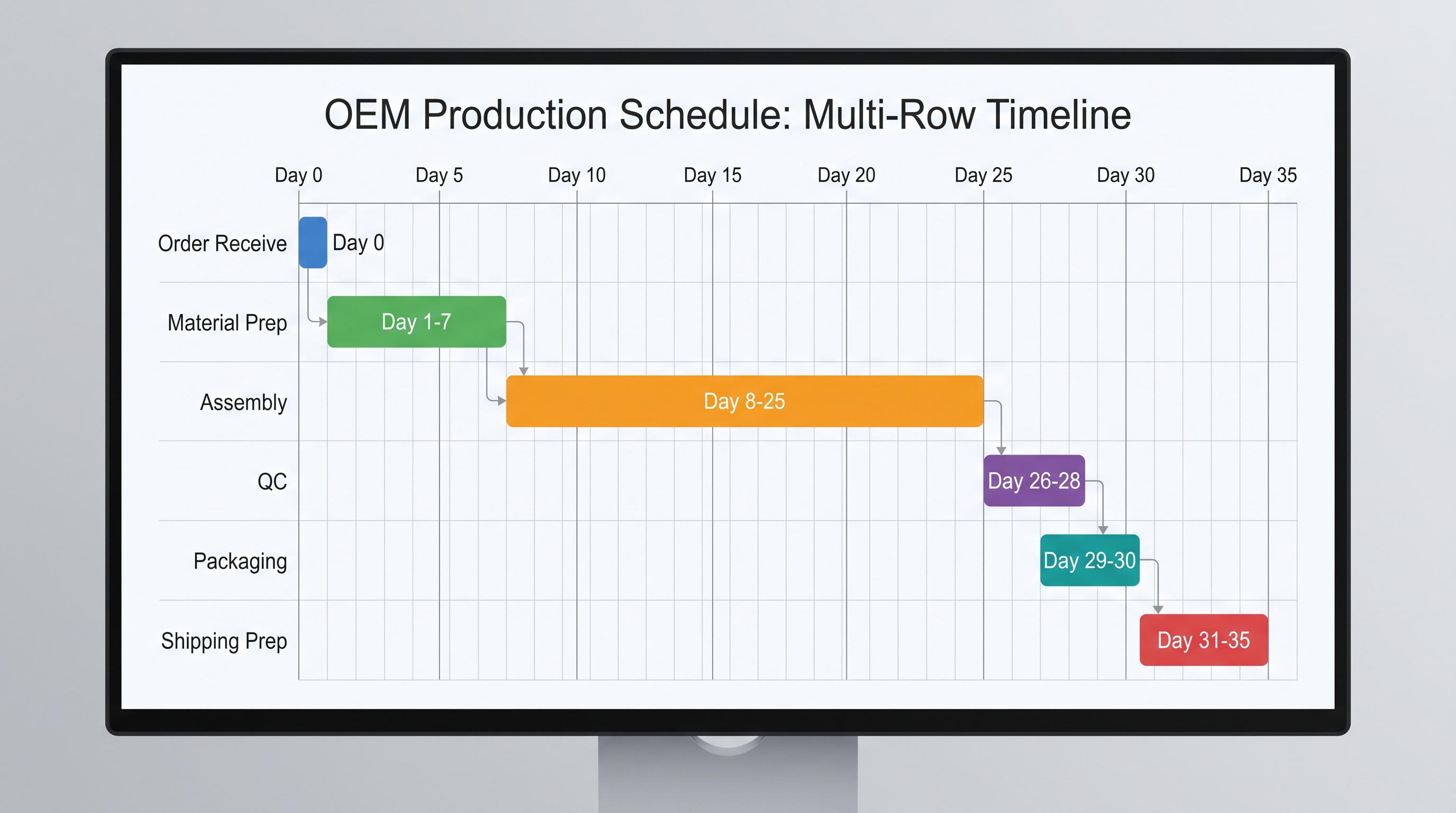
Projector OEM lead times typically break down as follows: component procurement takes 15–30 days, manufacturing and assembly requires 20–35 days, and quality assurance testing adds 5–10 days. Complex configurations with custom optics or proprietary firmware can extend total lead times to 120+ days. Understanding this timeline helps you set realistic delivery expectations and avoid costly expedite fees.
Our DataMax engineering group maintain buffer zones in our production scheduling—built-in flexibility that allows us to honor committed delivery dates even when upstream suppliers face delays. B2B buyers should ask prospective OEMs about their capacity utilization rates and backlog status. Manufacturers operating above 80% capacity typically experience longer lead times and reduced scheduling flexibility.
Inventory Management and Safety Stock Strategies
Effective inventory management balances carrying costs against stockout risk. For projector SKU portfolios, industry benchmarks suggest maintaining 4–6 weeks of safety stock for core models and 8–12 weeks for seasonal or promotional variants. Negotiate flexible delivery clauses that allow you to shift shipment dates by 2–4 weeks without penalty, enabling responsive inventory adjustments based on actual sell-through data.
Some OEMs offer vendor-managed inventory (VMI) programs where the manufacturer monitors your inventory levels and automatically triggers replenishment orders. According to the Supply Chain Management Association, VMI arrangements reduce stockout incidents by 35–50% while decreasing overall inventory carrying costs SCMA. Evaluate whether your volume justifies VMI program participation—these arrangements typically require minimum monthly order values of $50,000–$100,000.
How to Choose the Right Projector OEM Partner
Selecting an OEM manufacturer requires systematic evaluation beyond unit pricing alone. For B2B procurement teams finalizing supplier relationships, the total cost of ownership—including logistics, quality consistency, and responsive support—often outweighs front-end price negotiations.
Key Evaluation Criteria for Projector OEM Selection
When comparing manufacturers, request proposals that itemize costs across five dimensions: base unit price, tooling and setup fees, packaging requirements, inbound logistics, and post-sale technical support. Request a sample unit from each finalist—reputable OEMs typically offer 2–4 sample units at production cost or with sample fees credited against initial orders. Our DataMax engineering group provide comprehensive sample evaluation kits that let procurement teams test optical performance, firmware compatibility, and thermal management under real deployment conditions.
| Evaluation Factor | Minimum Threshold | Preferred Standard |
|---|---|---|
| Minimum Order Quantity (MOQ) | 100–200 units | 50–100 units for core SKUs |
| Sample Lead Time | 14–21 days | 7–10 days |
| Production Lead Time | 60–90 days | 45–60 days |
| Quality Certification | ISO 9001 | ISO 9001 + ISO 14001 |
Next Steps for Initiating OEM Discussions
Contact prospective manufacturers through dedicated B2B channels rather than generic inquiry forms. Prepare a detailed request for quotation (RFQ) that specifies resolution requirements, brightness targets, connectivity standards, and intended market deployment. This documentation demonstrates professional procurement practices and often open up more aggressive pricing tiers from manufacturers seeking qualified long-term partners.
