
Posted At: Jan 23, 2026 - 483 Views
Projector Compliance and Import in Spain: A 2026 Guide
You need 5,000 projector units in Valencia by Q2 2026, and your supplier just told you the CE documentation is incomplete. Your procurement team discovered that EN 55032 testing was never completed, the RoHS declaration is missing a component-level analysis, and the Spanish importer is demanding a EU Authorized Representative before customs will release the shipment. This is not an uncommon scenario for B2B buyers entering the European market, and the consequences—port delays averaging €2,000 per week, rerouting fees, and potential product seizures—hit your margin directly. Projector compliance and import in Spain requires more than a CE mark; it demands a structured approach to certification, documentation, and regulatory alignment that most Asian manufacturers cannot provide out of the box. We have guided dozens of OEM partners through this exact process, and this guide gives you the specific steps, costs, and timelines you need to plan a compliant 2026 import.
Related resources: ISO 9001 quality system guide
Understanding Spain's Regulatory Framework for Projector Imports
Spain operates within the European Union's unified compliance structure, but national enforcement mechanisms add specific obligations that directly impact your import process. The primary legislation governing electronic product imports is the Ley 7/2017 and its implementing regulations, which align with EU Directives 2014/30/EU (EMC), 2014/35/EU (Low Voltage), and 2011/65/EU (RoHS). The Spanish Agency for Consumption, Food Safety and Nutrition (AECOSAN) coordinates market surveillance, while customs authorities at ports like Valencia, Barcelona, and Algeciras conduct physical inspections on approximately 12% of electronic shipments, according to industry compliance reports Statista Trade Data.
For OEM buyers, this means your projector compliance and import in Spain strategy must account for three layers: EU-wide directives that establish baseline requirements, harmonized European standards (EN standards) that define how you prove compliance, and Spanish national regulations that dictate enforcement and documentation retention. The distinction matters because a CE mark alone does not guarantee smooth customs clearance if your technical file lacks the specific EN 55032 test data or if your RoHS declaration references an outdated substance list.
The CE Marking Process: What OEMs Must Complete Before Shipping
The CE marking process for projectors follows a structured pathway defined by EU Decision 768/2008. As a B2B procurement team, you should understand that manufacturers—either you as the importer or your OEM supplier acting on your behalf—must complete five core steps before affixing the CE mark and shipping to Spain.
First, conduct a conformity assessment to identify which EU directives apply to your specific projector model. Most commercial projectors fall under the EMC Directive and either the Low Voltage Directive (if internal power supply exceeds 50V AC or 75V DC) or the Radio Equipment Directive (if they include wireless connectivity). Second, ensure technical documentation exists, including block diagrams, circuit schematics, parts lists, and test reports from accredited laboratories. Third, draft an EU Declaration of Conformity that names your product, lists applicable directives and standards, and identifies the signatory. Fourth, register your product with the EU-based Economic Operator if your company lacks a physical presence in the EU—this is mandatory under EU Regulation 2019/1020, which took full effect in 2021. Fifth, affix the CE mark to your product and packaging before shipment.
The most common certification gap we see involves EMC testing. EN 55032:2015 ( Electromagnetic compatibility of multimedia equipment – Emission requirements) is the applicable standard, and it requires testing in an accredited laboratory with results documented in a specific format. Spanish customs officers have become increasingly proficient at identifying test reports that lack proper calibration certificates or that were conducted on prototypes rather than production-equivalent samples. When this happens, shipment release halts until you provide supplemental testing, which adds 4 to 8 weeks and approximately €3,000 to €6,000 in additional costs.
Key Standards and Specifications for 2026 Compliance
The European standards landscape for projectors continues to evolve, and 2026 brings updated references that compliance-conscious buyers must track. The following table summarizes the primary standards, their scope, and the approximate testing costs you should budget for when planning your import strategy.
| Standard | Scope | Primary Tests | Typical Lab Cost | Notes |
|---|---|---|---|---|
| EN 55032:2015 | EMC emissions for multimedia equipment | Radiated and conducted emissions | €2,500–€4,000 | Most common failure point for projectors |
| EN 55035:2017 | EMC immunity for multimedia equipment | ESD, surge, voltage dips, radiated immunity | €1,800–€3,200 | Required for full market compliance |
| EN 60950-1:2006 + A1:2010 + A2:2013 | IT equipment safety (legacy) | Electric shock, fire, mechanical hazards | €1,500–€2,500 | Being replaced by EN 62368-1 |
| EN 62368-1:2014 + A11:2017 | Audio/video and information technology equipment safety | Hazard-based safety engineering | €2,000–€3,500 | Current mandatory standard for new certifications |
| EN 50581:2012 | Technical documentation for RoHS assessment | Substance analysis documentation | €800–€1,500 | Often requires supplier component declarations |
| EU 2015/863 (RoHS 3) | Hazardous substance restriction | Restricted substance testing | €600–€1,200 | Applies to all electrical equipment sold in Spain |
For B2B procurement teams evaluating OEM suppliers, these numbers illustrate why "we already have CE marking" statements from factories require verification. The gap between a basic CE self-declaration and a fully documented, laboratory-tested compliance package can represent €6,000 to €12,000 in hidden costs that surface only during customs inspection or market surveillance audits.
How DataMax Simplifies Your Compliance Pathway
We built our compliance support infrastructure specifically because we watched B2B buyers absorb unnecessary costs and delays. Our approach starts with a pre-compliance audit that reviews your existing documentation—test reports, circuit diagrams, bill of materials, and Declarations of Conformity—against current EN standards and Spanish national requirements. We identify gaps before your shipment reaches Valencia or Barcelona, which means you negotiate tooling or testing costs with your supplier while you still have draw on, not after your containers sit in bonded warehouse.
For OEM buyers who lack an EU-based Economic Operator, we provide Authorized Representative services that satisfy EU Regulation 2019/1020 requirements. We maintain your Technical Construction Files in our EU office, coordinate with Spanish market surveillance authorities if questions arise, and ensure your documentation meets the 10-year retention requirement that most buyers discover only during an audit.
Our certification team has guided more than 200 OEM partners through the Spain import process since 2019, and we track regulatory updates—including the transition from EN 60950-1 to EN 62368-1 that becomes mandatory for new projector certifications in 2026. When you engage us, you receive a compliance roadmap that maps your specific model specs to the exact documentation package required, with estimated timelines and costs you can present to your procurement leadership for budget approval.
simplify Documentation and Customs Clearance for Projector Imports
Spanish customs authorities apply rigorous checks to electrical equipment imports under EU Regulation 2019/1020, which established Economic Operator obligations starting January 2021. For B2B procurement teams, understanding the documentation chain prevents the most common cause of shipment delays: incomplete Declarations of Conformity or missing technical files.
Required Documentation Package
Your shipment clearance depends on three core document categories. First, commercial documentation includes the commercial invoice, packing list, and Bill of Lading or Air Waybill. Second, regulatory documentation requires the signed Declaration of Conformity (DoC), CE marking evidence, and test reports from accredited laboratories. Third, administrative documentation encompasses the Authorized Representative appointment letter if your factory lacks EU presence, plus the 10-year retention declaration for technical files.
According to the Spanish Tax Agency (Agencia Tributaria), customs clearance for electrical equipment typically takes 2-5 business days when documentation is complete. Incomplete packages routinely face 15-30 day holds while authorities request supplementary information, creating storage costs that average €50-150 per container per day at Spanish ports.
The Economic Operator Requirement
If your OEM supplier operates from China, Taiwan, or another non-EU location, you need an EU-based Economic Operator to satisfy legal obligations. This party holds your technical file, maintains compliance records, and serves as the contact for Spanish market surveillance inspections. We have observed that many buyers underestimate this requirement until their first Spanish customs interaction reveals the gap.
Our Authorized Representative service addresses this directly. We maintain your technical construction file in our Madrid office, coordinate responses to any regulatory inquiries within 72 hours, and ensure your documentation meets the specific retention schedules that Spanish authorities enforce. This arrangement typically costs €1,200-2,500 annually depending on your product complexity, a fraction of the €5,000-15,000 expenses that delayed shipments generate.
Navigating Testing Requirements and Certification Timelines

Projector certification involves laboratory testing, documentation preparation, and regulatory submission. Most B2B buyers approach this process without understanding the sequential nature of each phase or the typical duration each step demands.
Laboratory Testing Phase
Accredited testing laboratories in the EU—including TÜV, SGS, and Bureau Veritas facilities—conduct EMC and safety assessments according to EN standards. Projector testing typically requires 4-8 weeks for completion, though this timeline extends significantly if initial testing reveals non-conformities requiring redesign.
| Testing Phase | Duration | Cost Range | Pass Rate (First Attempt) |
|---|---|---|---|
| Pre-compliance audit | 1-2 weeks | €500-1,200 | Identifies issues before formal testing |
| EMC testing (EN 55032, EN 55035) | 2-3 weeks | €4,300-7,200 | 65-70% for first-time designs |
| Safety testing (EN 62368-1) | 2-3 weeks | €2,000-3,500 | 80-85% for mature designs |
| RoHS verification (EU 2015/863) | 1-2 weeks | €600-1,200 | 90%+ with component declarations |
| Report issuance and review | 1 week | Included in lab fees | Documentation completeness dependent |
Our engineering team has supported numerous OEM partners through the testing phase, identifying common failure points before laboratory submission. Projector designs frequently encounter issues with radiated emissions above EN 55032 limits, particularly when cooling fans or power supplies generate interference that couples to video signal pathways.
Certification Timeline for Spain Market Entry
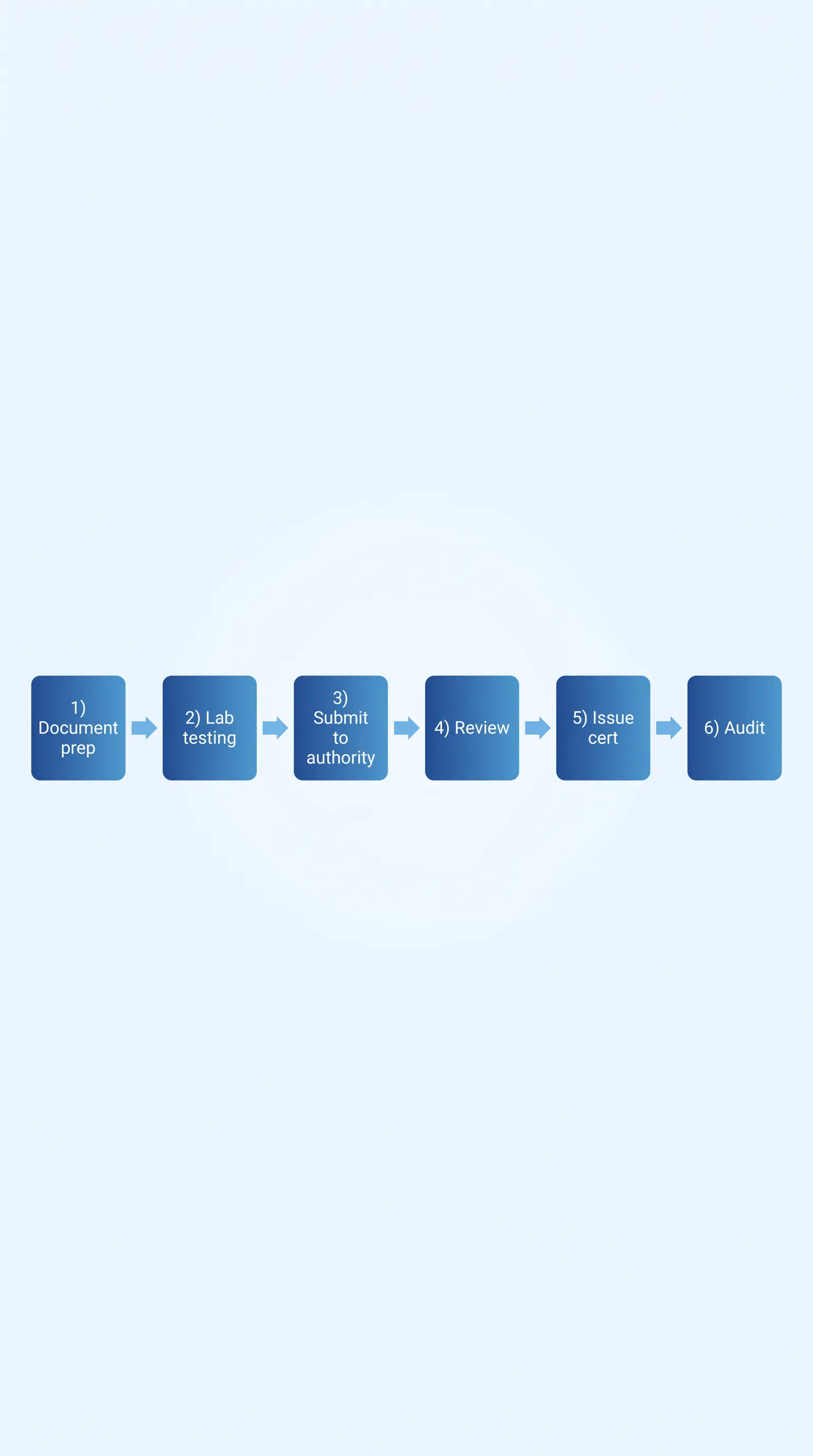
From initial engagement to market-ready status, the complete certification process spans 10-16 weeks under normal conditions. This timeline assumes no major redesign requirements and includes the mandatory EN 62368-1 transition planning for certifications initiated in 2025-2026. We have guided clients through accelerated timelines as short as 8 weeks when pre-existing test reports from similar designs could be draw on and supplemented with targeted additional testing.
The transition from EN 60950-1 to EN 62368-1 affects all projector certifications initiated after August 2026, per the official European Commission guidance on the standard replacement. We maintain active tracking of these transition deadlines and flag affected certifications during our initial compliance assessment, ensuring your procurement timeline accounts for potential retesting if your current documentation relies on the legacy standard.
How to Select a Compliant Projector Supplier for Spain Import
Choosing the right supplier affects your time-to-market, compliance costs, and ongoing operational burden. For B2B procurement teams evaluating Spain market entry, we recommend assessing three core areas before committing to a partnership.
Compliance Infrastructure Assessment
Before requesting quotes, verify the supplier's certification portfolio. Request copies of existing EN 62368-1 test reports, RoHS declarations, and packaging compliance documentation. Ask about their EU Authorized Representative arrangement and whether they maintain Spanish-language documentation capabilities.
Key supplier evaluation criteria:
- Existing EN 62368-1 certifications covering your projector category
- Experience with Spanish market regulatory requirements
- Documentation language support (Spanish/English)
- EU Authorized Representative service availability
- Sample policy and MOQ flexibility for B2B orders
| Supplier Capability | Standard Expectation |
|---|---|
| Minimum order quantity (MOQ) | 100-500 units for custom compliance |
| Sample lead time | 2-4 weeks for pre-production samples |
| Documentation package | Spanish-language declaration of conformity |
| Communication channel | Direct technical contact for regulatory questions |
For OEM buyers, we offer flexible MOQ structures starting at 200 units for customized compliance configurations, with sample orders available within 3 weeks. Our technical team maintains direct communication channels for regulatory inquiries throughout your project lifecycle.
What DataMax Recommends
Partner for Compliant Spain Market Entry
Successful projector import into Spain depends on early compliance planning and supplier selection based on certification infrastructure rather than price alone. The investment in proper documentation and testing prevents costly shipment delays that can exceed €5,000 per incident.
Ready to begin your Spain compliance journey? Our technical team provides end-to-end certification management for B2B clients.
Request a compliance consultation | View projector product line | Download compliance checklist
