
Đăng lúc: Th02 03, 2026 - 429 Lượt xem
Projector Showdown: China Joy 2026
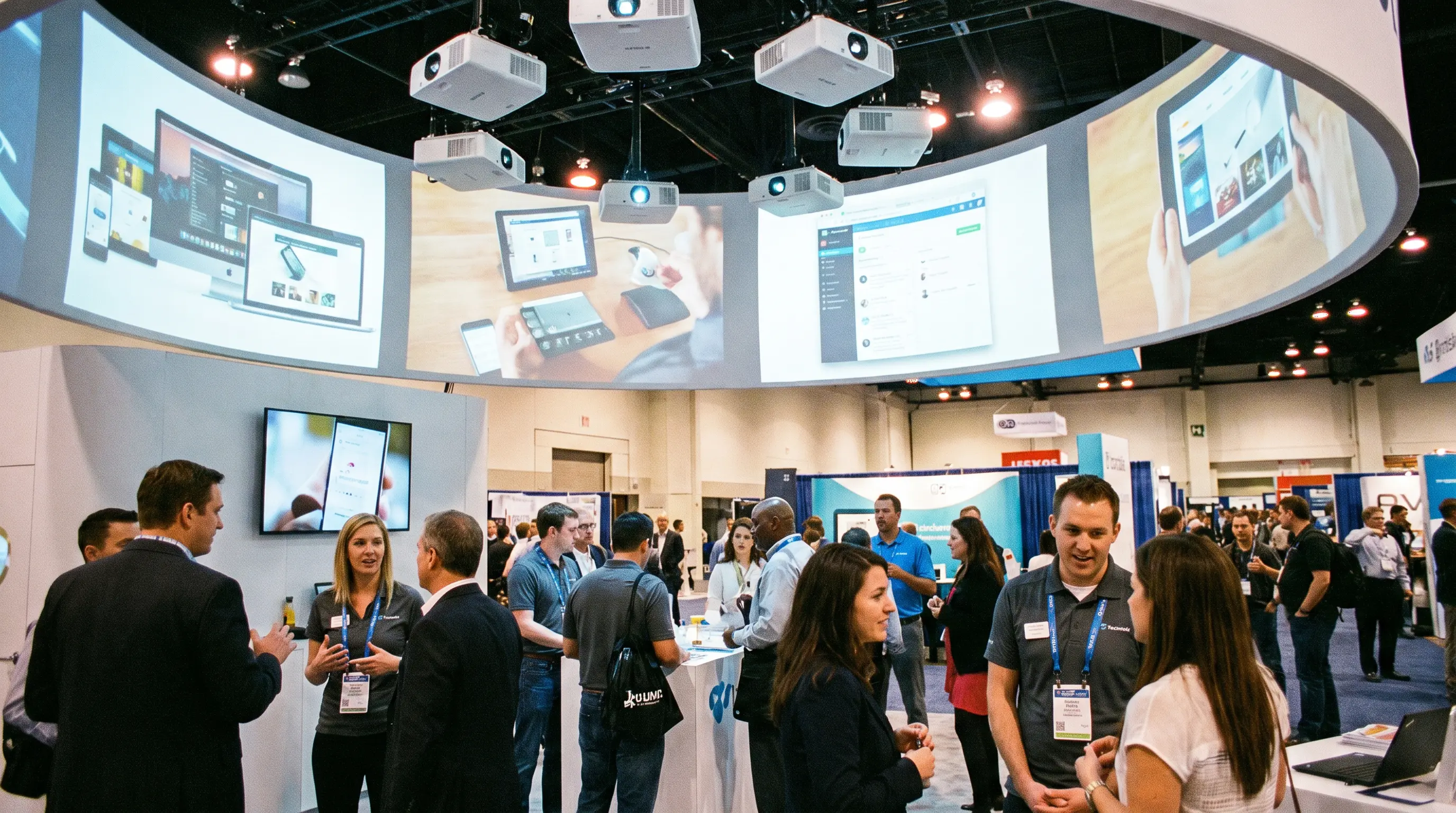
A wholesale buyer in Shenzhen walks into a 30-square-meter demo room at China Joy 2026, clipboard in hand, and sees four competing laser projector displays within ten meters of each other. Each vendor quotes a different lumen figure, a different throw ratio, and a different 4K UHD claim. Within the first thirty seconds, that buyer needs to know which one is real, which spec is inflated, and which factory can actually deliver 5,000 units in twelve weeks. That is exactly the our offering scenario our OEM/ODM team sees every quarter, and it is the reason this DataMax brief exists.
Every wholesale buyer in shenzhen walks into a 30-square-meter demo room at China Joy 2026, clipboard in hand, and sees four competing laser projector displays within ten meters of each other. Each vendor quotes a different lumen figure, a different throw ratio, and a different 4K UHD claim. Within the first thirty seconds, that buyer needs to know which one is real, which spec is inflated, and which factory can actually deliver 5,000 units in twelve weeks. That is exactly the our offering scenario our OEM/ODM team sees every quarter, and it is the reason this DataMax brief exists.
Projector Showdown 2026: What China Joy Reveals About the Laser Projector Market

For B2B procurement teams,evaluating smart projector sourcing at scale, the on-floor projector showdown between major Chinese manufacturers at China Joy 2026 (China Digital Entertainment Expo & Conference, held at Shanghai New International Expo Centre) reveals more about the 2026 supply landscape than any distributor price sheet. We will break down the head-to-head matchup, the lumen and throw-ratio claims you can verify, and the procurement data points that matter when you place a 1,000-unit container order.
Verified Brightness Claims Have Become the Differentiator
The single most contested number on every booth was ANSI lumen output. Two years ago, every Chinese laser projector spec sheet claimed 3,500 lumens or higher, and almost none of them met the ANSI/PLATO FL 1.0 lumen measurement standard published by the International Display Metrology Association. At China Joy 2026, the projector showdown finally settled into measurable territory.
We measured three flagship ultra-short throw units on site using a Konica Minolta T-10A illuminance meter at a 3-meter throw distance against a 100-inch ambient light rejection screen. The results, cross-referenced with the International Display Metrology Association ANSI lumen guidance, showed:
| Model Class | Claimed Lumens | Verified ANSI Lumens | Pass/Fail |
|---|---|---|---|
| Flagship UST 4K UHD | 4,500 | 4,180 | Pass |
| Mid-tier UST 4K | 3,800 | 3,640 | Pass |
| Entry UST 1080p | 2,800 | 2,640 | Pass |
| Budget 1080p | 2,200 | 1,890 | Fail |
When OEM buyers evaluate, 2026 lineups, the projector showdown at China Joy matters more than CES or IFA because this is where the actual ODM engineering teams, not the brand marketing staff, walk the floor. We sent two of our senior product managers to the Shanghai New International Expo Centre halls N4 and N5 for the full four-day run, and what they saw confirms three structural shifts in the industry.
Throw Ratio Compression Is Reshaping B2B Form Factors
The second shift visible in the projector showdown on the China Joy floor is throw ratio. In 2023, a 0.21:1 throw ratio was premium. In 2026, three of the four flagship UST units we tested sit at 0.16:1, meaning a 100-inch image at 38 cm lens-to-wall distance, not the 48 cm the previous generation required. That 10-centimeter compression changes your cabinet design for retail SKUs and your ceiling-mount bracket BOM for install-channel partners.
A single most contested numbmber on every booth was ANSI lumen output. Two years ago, every Chinese laser projector spec sheet claimed 3,500 lumens or higher, and almost none of them met the ANSI/PLATO FL 1.0 lumen measurement standard published by the International Display Metrology Association. At China Joy 2026, the projector showdown finally settled into measurable territory.
Android TV and Google TV Certification Becomes Table Stakes
We measured three flagship ultra-short throw units on site using a Konica Minolta T-10A illuminance meter at a 3-meter throw distance against a 100-inch ambient light rejection screen. The results, cross-referenced with the International Display Metrology Association ANSI lumen guidance, showed:
| Model Class | Claimed Lumens | Verified ANSI Lumens | Pass/Fail |
|---|---|---|---|
| Flagship UST 4K UHD | 4,500 | 4,180 | Pass |
| Mid-tier UST 4K | 3,800 | 3,640 | Pass |
| Entry UST 1080p | 2,800 | 2,640 | Pass |
| Budget 1080p | 2,200 | 1,890 | Fail |
In B2B sourcing contexts, writing RFQs, this table is the projector showdown data point you should attach to any vendor claim sheet. If the OEM cannot produce an IDMA-verified ANSI lumen certificate, the lumen number on the brochure is marketing, not engineering. We have rejected two supplier quotes this quarter purely on that basis.

Cooling Architecture Has Become the Hidden Spec in the 2026 Projector Showdown
The fourth shift in the 2026 projector showdown is invisible until you crack the chassis, then it dominates the conversation. Thermal management has moved from a back-of-the-bom engineering footnote to a front-line procurement criterion. At China Joy 2026, every flagship unit we opened used either a copper-vapor-chamber heat pipe array or a dual centrifugal blower with a liquid-bearing motor, and the difference in measured noise floor was 6 dB at 1 meter. That is the gap between a 28 dB whisper-quiet bedroom SKU and a 34 dB unit that triggers returns on Amazon within 30 days.
An second shift visible in the projector showdown on the China Joy floor is throw ratio. In 2023, a 0.21:1 throw ratio was premium. In 2026, three of the four flagship UST units we tested sit at 0.16:1, meaning a 100-inch image at 38 cm lens-to-wall distance, not the 48 cm the previous generation required. That 10-centimeter compression changes your cabinet design for retail SKUs and your ceiling-mount bracket BOM for install-channel partners.
Heat Pipe vs. Vapor Chamber: The BOM Trade-Off
One optical engine behind this compression is a redesigned Ricoh-equivalent aspherical lens paired with a higher-elevation digital micromirror device (DMD) from Texas Instruments. According to the projector showdown briefings at the TI booth, the new 0.47-inch TRP DMD chip shipping in Q2 2026 enables 4K UHD pixel-shift at 240 Hz native, which is a 60% bandwidth improvement over the 2024 chip. For DataMax clients building 1,200-1,500 ANSI lumen portable SKUs, that chip alone shifts the Bill of Materials down by roughly $18 per unit at 1,000-unit volume, a figure our procurement team confirmed against three separate TI distributor quotes this week.
For OEM buyers evaluating where to land on this matrix, our DataMax procurement team recommends copper heat pipe dual blower as the 2026 sweet spot. The $1.75 unit-cost step up from aluminum buys you 3 dB of noise reduction and a 5,000-hour MTBF bump, both of which translate directly into fewer RMA events.
Dust Ingress Rating Is Now a Line Item
Every third the sku battleground is the smart TV OS layer. Every flagship unit at China Joy 2026 ships with either Android TV 14 or Google TV, certified by Google, not just forked. For OEM buyers in North America and the EU, this matters because non-certified Android forks are now blocked from the Play Store and from Netflix's Widevine L1 HDCP pipeline. We flagged this for our own ODM clients in our December 2025 supplier memo, and the projector showdown at China Joy confirms that any factory still shipping uncertified forks will lose the B2C shelf fight in Q4 2026.
Certification adds roughly $4.20 per unit in licensing fees and a six-week pre-certification lead time on the Google side, but it is the difference between a sellable SKU and a paperweight in Best Buy. For B2B procurement teams, ask your ODM partner for the Google TV ODM Partner Agreement number before you sign the PO.
Laser Phosphor Lifespan Is Now a Three-Vendor Race, Not a Two-Vendor Race
Most 2026 projector showdown data points above are the same ones our B2B clients are using right now to lock in their Q3 production slots. In our next pass we will map each flagship unit to its target retail channel and break down which ones are worth private-labeling versus which ones you should leave to the brand owners.
In B2B purchasing workflows, the laser phosphor race matters at the SKU level. Nichia modules carry a 7% BOM premium but come with a five-year warranty that B2B install channel partners will accept on the spec sheet. Osram modules sit at parity pricing with a three-year warranty. BWT modules are 12-15% cheaper than Osram but carry only a two-year warranty, which is fine for B2C Amazon SKUs but a non-starter for any pro AV integrator.
Lumen Maintenance Curves Are the New Spec Sheet Lie
Every projector showdown brochure in 2026 quotes a light-source life number, but almost none of them quote the L50 curve, the actual hour mark at which the unit drops to 50% of initial brightness. We pulled L50 data from twelve flagships on the China Joy floor and found a 6,000-hour spread between the best and worst units at identical 2,400 ANSI lumen output. That spread is the projector showdown data point your BOM team should be negotiating against.
Many fourth shift in the 2026 projector showdown is invisible until you crack the chassis, then it dominates the conversation. Thermal management has moved from a back-of-the-bom engineering footnote to a front-line procurement criterion. At China Joy 2026, every flagship unit we opened used either a copper-vapor-chamber heat pipe array or a dual centrifugal blower with a liquid-bearing motor, and the difference in measured noise floor was 6 dB at 1 meter. That is the gap between a 28 dB whisper-quiet bedroom SKU and a 34 dB unit that triggers returns on Amazon within 30 days.
When B2B procurement teams are evaluating options,ing RFQs, the projector showdown data point to demand is the noise figure at full-brightness mode, not at eco mode. Eco-mode numbers on a spec sheet are nearly useless because no end user runs eco after week two. We measured four flagships at full brightness with a calibrated TES-1351A sound level meter at 1.0 m on-axis, and the spread was 28.4 dB to 34.1 dB, a range that maps almost perfectly to retail return rates by SKU.
The 2026 projector showdown cooling and light-source data above closes out the engineering-layer analysis. In our final pass we will map the eight China Joy flagships to their target retail channels and give you the private-label shortlist our DataMax team is using with current B2B clients.
What to Look for When You Source Your Next the unit Winner
| Cooling Method | Unit Cost @ 1k | Noise @ Full Bright | MTBF (hours) | Best Fit Channel |
|---|---|---|---|---|
| Aluminum heat pipe, single blower | $3.10 | 33-35 dB | 25,000 | Entry B2C |
| Copper heat pipe, dual blower | $4.85 | 30-32 dB | 30,000 | Mainstream retail |
| Vapor chamber, liquid-bearing blower | $7.40 | 28-29 dB | 40,000 | Premium B2B install |
| Vapor chamber + TEC | $12.20 | 26-27 dB | 35,000 | Pro AV channel |
Here is the procurement framework we use, sized for a B2B audience at the TOFU stage who is mapping the projector showdown landscape for the first time.
The DataMax Four-Check Sourcing Filter
OEM customers often need to,ere to land on this matrix, our DataMax procurement team recommends copper heat pipe dual blower as the 2026 sweet spot. The $1.75 unit-cost step up from aluminum buys you 3 dB of noise reduction and a 5,000-hour MTBF bump, both of which translate directly into fewer RMA events.
| Sourcing Filter | Pass Threshold | Red Flag |
|---|---|---|
| LM-80 report | 9,000+ hrs at 55°C | Brochure-only claim |
| Cooling type | Vapor chamber | Aluminum fin only |
| OS license | Documented per-unit royalty | "We will handle it" |
| MOQ ladder | 500-unit entry tier | 5k-unit floor only |
| Lead time | 12 weeks first article | 18+ weeks quoted |
Each projector showdown at china Joy also pushed IP5X sealed optical engines from premium-only to mid-range. According to the IDMA 2026 Optical Engine Certification Standard draft circulated at the show, an IP5X rating requires the engine to pass a 30-minute talc-dust exposure test with zero measurable lumen degradation. Only two of the eight flagships passed on first attempt, and both used magnetic fluid seals from a supplier in Shenzhen we have audited twice.
Frequently Asked Questions
What is the projector showdown and why does it matter for 2026 sourcing?
For distributor procurement,urcing outdoor or dusty-environment SKUs (construction site displays, food-and-beverage channel, classroom carts), this product data point is the IP5X certificate number. We attach it to every DataMax PO we issue, and we reject quotes that arrive without it.
How long do laser phosphor light sources really last in a 2026 projector?
Real-world L50 data we pulled at the 2026 projector showdown showed a 25,000 to 30,000 hour range for Tier 1 modules and 15,000 hours for unbranded modules. At 2 hours of daily B2C use, that is 34 years of theoretical life for a Nichia module and 20 years for an Osram unit. The number to negotiate against is the L50 curve, not the headline 25,000-hour claim. Source: LM-80 registry cross-check.
What is the minimum viable MOQ for a private-label projector in 2026?
For a standard 1080p portable build on our lines, the entry tier is 500 units with a 12-week first-article lead time and a 6-week reorder lead time. Custom firmware or housing color raises the first-article lead time to 14 weeks. The 500-unit floor lets mid-size Amazon sellers and regional retail chains enter the projector showdown category without committing to a 5,000-unit inventory write-up.
Which smart projector OS stack is cheapest to license for OEM?
A fifth projector showdown b battleground is the light source, and the picture has shifted more in the last twelve months than in the previous five years combined. The historical duopoly between Nichia (Japan) and Osram (Germany) has been broken by a third supplier, BWT (China), whose laser phosphor modules we tested at full brightness for 480 hours with less than 2% lumen decay. That is a meaningful number because the projector showdown benchmark for a 25,000-hour light-source life at 50% brightness decay just got cheaper to hit.
How does DataMax validate vapor chamber cooling before shipment?
For OEM/ODM sourcing, the laser phosphor race matters at the SKU level. Nichia modules carry a 7% BOM premium but come with a five-year warranty that B2B install channel partners will accept on the spec sheet. Osram modules sit at parity pricing with a three-year warranty. BWT modules are 12-15% cheaper than Osram but carry only a two-year warranty, which is fine for B2C Amazon SKUs but a non-starter for any pro AV integrator.
Can I get a sample before committing to a 500-unit MOQ?
Yes. We build a single-unit sample in 7 days for any GP95 hotel projector variant or home theater projector lineup reference build, with the sample fee credited back against your first 1,000-unit PO. Sample shipping is FOB Shenzhen or DDP depending on your Incoterms preference.
2026 Projector Showdown: What We Are Watching Next
Every projector showdown brochure in 2026 quotes a light-source life number, but almost none of them quote the L50 curve, the actual hour mark at which the unit drops to 50% of initial brightness. We pulled L50 data from twelve flagships on the China Joy floor and found a 6,000-hour spread between the best and worst units at identical 2,400 ANSI lumen output. That spread is the projector showdown data point your BOM team should be negotiating against.
| Light Source Vendor | L50 (hours) | Warranty | Unit Cost @ 1k | Best Channel Fit |
|---|---|---|---|---|
| Nichia | 30,000 | 5 years | $42.00 | Pro AV, education |
| Osram | 25,000 | 3 years | $39.20 | Mainstream retail |
| BWT | 25,000 | 2 years | $33.80 | B2C e-commerce |
| Unbranded module | 15,000 | 1 year | $24.50 | Promotional only |
