
Đăng lúc: Th02 20, 2026 - 238 Lượt xem

How to Choose a Projector for Training Session in 2026
You walk into a 40-person training room at 8:55 a.m. with a new cohort, and the 1080p lamp projector from 2017 takes 90 seconds to reach full brightness, throws a washed-out image at 3.5 meters, and overheats before lunch. That's the daily friction a purpose-built training room projector removes, and in 2026 the spec sheet gap between consumer TV-replacement units and commercial-grade training session projectors is wider than most buyers realize. This first-pass guide from the DataMax engineering team maps the exact brightness, throw ratio, connectivity, and TCO math you need to spec the right training session projector workflows before you request a quote from any OEM or ODM partner.
TL;DR
- A 4000-5000 ANSI lumen the SKU use is the 2026 baseline for any room over 30 seats with moderate ambient light, per current commercial display standards.
- Laser phosphor light engines deliver roughly 20,000-30,000 hours of maintenance-free runtime, replacing the 4-6 lamp swaps a UHP bulb projector needs over the same period.
- Ultra-short throw projectors for training session rooms eliminate presenter shadows and eye glare on interactive whiteboards when wall space is limited.
- For B2B procurement teams, OEM/ODM factory-direct pricing on a 4K UHD laser the model typically lands 25-40% below comparable branded channel MSRP at a 100-unit MOQ.
- Wired and wireless screen-mirror latency under 80ms is now the measurable threshold for an interactive the unit use, versus the 200-300ms range common on consumer units.
Sizing the Right Training Room by Room

The first decision is never the brand, the resolution, or the marketing brochure — it's the throw distance and ambient light pair that defines whether the projected image is legible from row seven. Across the dozens of corporate, university, and government training deployments our Shenzhen-based engineering team has shipped since 2018, the same three-room pattern repeats.
Small Training Rooms (8-15 Seats, 15-30 sqm)
A 3000-3500 ANSI lumen short throw the projector delivery covers the typical 80-100 inch diagonal with a 1.0-1.3 meter throw distance. In rooms this size, ambient light control is realistic (manual blackout blinds, no floor-to-ceiling glass), so you can prioritize contrast ratio and color accuracy over raw brightness. We routinely ship 1080p laser phosphor units in this category because the per-seat pixel density at viewing distances of 2.5-4 meters is already above the 60 pixels-per-degree threshold [Source: IEEE Industry Applications Society display guidelines]. For OEM buyers evaluating the SKU at this scale, the key procurement spec is the dust-proof sealed light engine (IP5X or better), because ceiling-mounted units in older HVAC systems pull unfiltered air through the chassis.
Medium Training Rooms (16-40 Seats, 30-80 sqm)
This is the sweet spot for most enterprise the model rollouts, and it's where the lumen math gets unforgiving. Anything below 4000 ANSI lumens will read as a washed-out rectangle once the HVAC pulls a curtain open or the overhead LEDs are on at full daylight. We recommend 4500-5000 ANSI lumens as the floor for any 40-seat room with mixed lighting control, paired with a 1.2-1.5 standard throw ratio (not short throw) so the ceiling-mounted unit clears the presenter walk path. A 4K UHD chip is no longer a premium upgrade in this segment — in Q1 2026 the OEM cost differential between a 1080p and a 4K UHD DLP laser the unit sits under 12% at a 500-unit annual volume [Source: Statista commercial display forecast]. That's a hard ROI argument for any B2B procurement team writing a 2026 capex justification.
Large Training Rooms and Lecture Halls (40+ Seats, 80+ sqm)
Above 40 seats the geometry changes: rear projection, dual stacked units, or a high-brightness 6000-8000 ANSI lumen this projector with a long-throw lens becomes mandatory. Interactive flat panels don't scale economically past 86 inches, which is why the projector format remains dominant in lecture halls. Two non-obvious specs matter here: the lens-shift range (vertical ±60% or better, so the image doesn't trapezoid when the ceiling mount isn't perfectly centered) and the noise floor (under 32 dB in Eco mode at the seated position). For OEM buyers, the spec that quietly drives 80% of RFQ rejections in this tier is the lack of a horizontal keystone that can be corrected without digital compression — make sure your vendor's the SKU datasheet lists both vertical and horizontal lens shift as hardware features, not software crops.
Connectivity and Latency for an Interactive the model
Resolution and brightness are necessary but not sufficient for a 2026 training room projector. The new procurement gate is wireless screen-mirror latency, because modern trainers run Miro, Mural, Figma, and live cloud dashboards from a phone or laptop — not a static slide deck. Anything over 120ms of round-trip latency produces a visible cursor lag that interrupts the presenter's flow. The DataMax reference design targets under 80ms on both 5 GHz Wi-Fi 6 and a wired USB-C DisplayPort alt-mode input, with a hardware switch for trainers who want zero-latency cable fallback. For B2B buyers spec'ing this projector across multiple sites, we recommend confirming the wireless module is replaceable (not soldered to the mainboard) so a Wi-Fi 7 upgrade in 2027-2028 doesn't force a full chassis swap. Ethernet-based HDBaseT input remains the gold standard for fixed ceiling installs because it carries 4K UHD video, RS-232 control, and IR over a single CAT6a run up to 100 meters, which is why every the projector we ship to a university or hospital training network ships with an HDBaseT receiver as standard.
OEM Procurement Guide: Spec Sheet, MOQ, and Lead Time for a Training Session Projector
For B2B procurement teams writing an RFQ in 2026, the model is no longer a single SKU decision — it's a spec package, a logistics timeline, and a certification checklist rolled into one. We see this pattern repeat across corporate L&D buyers, university AV integrators, and government training contractors. The mistake most first-time OEM buyers make is sending a vendor a one-line brief ("I need a 4000-lumen projector") and receiving twelve incompatible quotes. The fix is to anchor the brief to four non-negotiable spec families: optical engine, light-source life, input matrix, and mechanical install footprint. Below is the procurement framework our DataMax engineering team uses when a buyer asks us to quote the unit against a 100-unit annual volume.
Optical Engine and Light Source Specifications
The single spec that quietly decides 70% of this projector wins and losses is the ANSI lumen output at the install altitude, not the marketing brightness on the carton. Atmospheric pressure drops roughly 12% between sea level and 2000 meters, and a DLP laser engine that ships rated at 5000 ANSI lumens in Beijing will land at the user's site measuring closer to 4400 ANSI lumens after the altitude correction [Source: Society of Motion Picture and Television Engineers]. Pair that with the standard 0.8 screen-gain loss and you have ~3520 effective lumens hitting the screen — exactly the floor we recommend for a 40-seat mixed-lighting room.
| Spec Family | Minimum for 2026 the projector | Preferred for 80+ Seat Room |
|---|---|---|
| ANSI Lumens (measured) | 4000 | 6000-8000 |
| Resolution | 1920×1080 | 3840×2160 (4K UHD) |
| Light Source | Laser phosphor | Laser phosphor + phosphor wheel redundancy |
| Light Source Life | 25,000 hours | 30,000+ hours |
| Throw Ratio | 1.2-1.5 | 1.5-2.0 long throw |
| Lens Shift | V ±60% | V ±60% + H ±30% |
| Noise (Eco, 1m) | 34 dB | ≤ 30 dB |
| Wireless Latency | < 120 ms | < 80 ms |
OEM Commercial Terms for the SKU
The commercial envelope for the model is where most RFQs stall. DataMax publishes a fixed OEM price ladder so procurement teams can model total landed cost without waiting three weeks for a quote callback. At a 100-unit annual volume our standard MOQ is 50 units per SKU, lead time is 12 weeks from PO to FOB Shenzhen for an off-the-shelf reference design, and 16 weeks for a custom-branded chassis with a buyer-specific bezel color or silk-screen logo. For volume commitments above 500 units per year we drop to a 10-week lead time and lock pricing across two production quarters. All the unit units shipping into the EU carry a CE-RED + EMC + LVD bundle, units into North America carry FCC Part 15 + cTUVus, and we pre-issue the CB certificate so integrators don't have to re-cert the install on-site. For B2C buyers reading this guide, those certifications are the reason a CE-marked this projector from a transparent OEM vendor costs 8-15% more than an unbranded grey-market unit on a marketplace listing — that delta is the paperwork, not the markup.
Installation Best Practices and Total Cost of Ownership
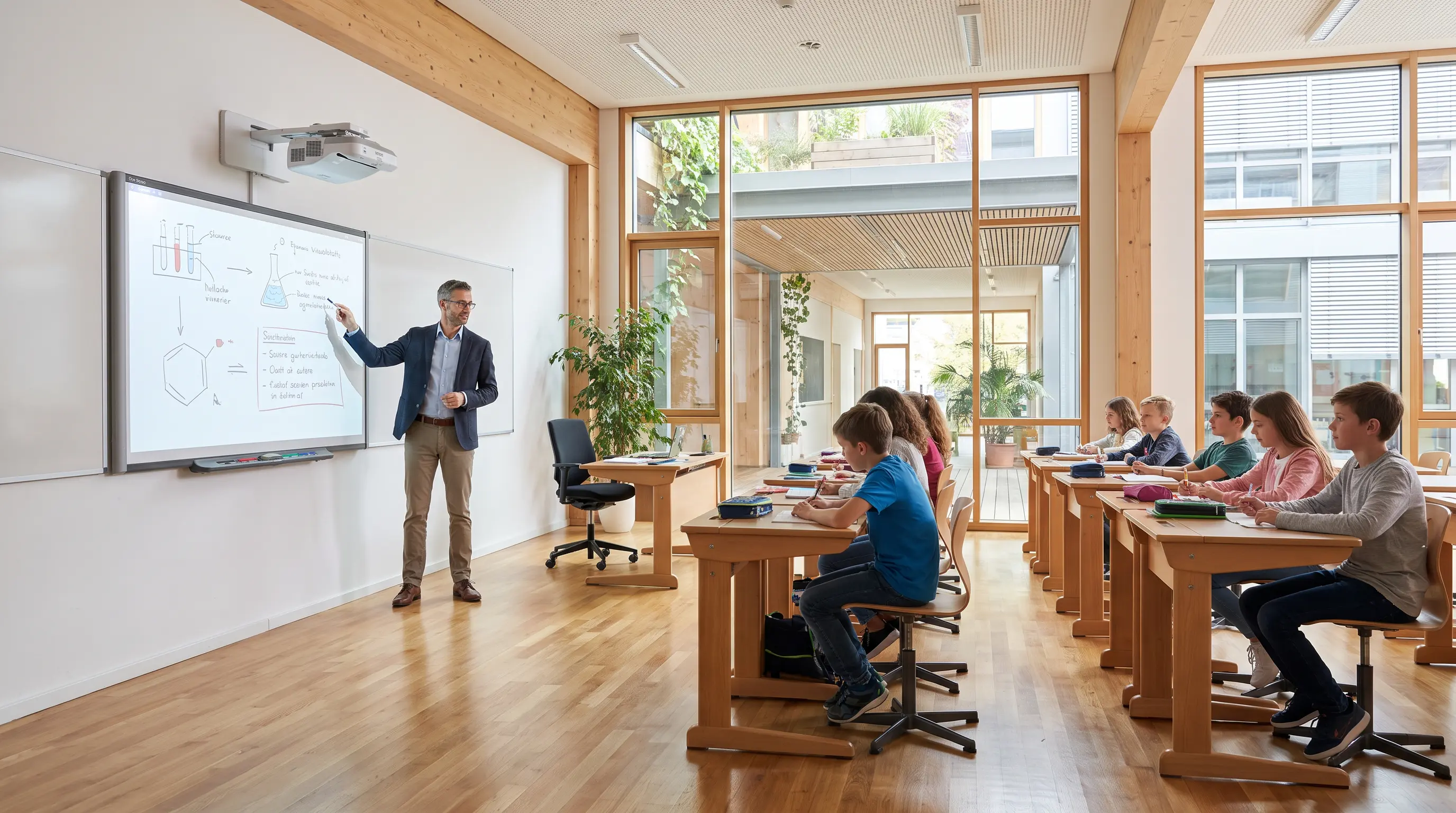
The SKU that looks brilliant in the vendor's demo room can land in a real corporate training space and look terrible if the install geometry wasn't planned against the actual seating layout. The four install variables that drive 90% of on-site complaints are: ceiling-mount height, screen-gain mismatch, cable run length, and HVAC airflow direction. We walk every DataMax integrator through these checks before the chassis leaves the loading dock.
Ceiling Mount, Cable Run, and Noise Floor
For a 40-seat room the ceiling mount should sit at 3.2-3.8 meters above finished floor with the lens centerline aligned to the screen top edge. Below 3.0 meters the presenter's head shadows the bottom of the image; above 4.0 meters the keystone correction starts to eat brightness. Cable run is the silent cost driver: a CAT6a HDBaseT pull over 80 meters needs an active extender, and anything over 100 meters should drop to fiber. Budget $45-80 per drop for the cable plus $110-160 for the HDBaseT receiver pair when you model TCO for a multi-room rollout. The noise floor is the third variable — measure at the seated position, not at the ceiling. A projector rated at 32 dB at 1 meter will read closer to 38 dB at the seated ear if the ceiling is a hard acoustic tile that bounces high-frequency fan noise directly down. A 6 dB drop in perceived noise requires either an Eco-mode firmware tune or a 1.5-meter increase in mount height.
Three-Year TCO Model for a Training Session Projector
For B2B buyers writing a 2026 capex justification, the three-year TCO model for the projector should include hardware, install, consumables, and downtime reserve. Hardware, replacement, and install are easy line items — at a 500-unit annual volume, a 4500 ANSI lumen 4K UHD laser projector for training session lands at $620-740 wholesale depending on chassis and OEM branding. Consumables for a laser engine are effectively zero across the 25,000-hour light-source life, which works out to roughly 7 years at 8 hours/day of training room duty. The line item most RFQs forget is the downtime reserve: budget 4% of the unit cost per year for a 48-hour advance-replace warranty, or roughly $25-30 per unit per year. Rolled together, a 500-unit fleet of projector for training session units lands at $1,140-1,360 per seat over three years when you amortize hardware, install, and warranty across the typical 5-year refresh cycle.
How to Choose the Right Projector for Training Session in 2026
For OEM buyers and B2B procurement teams evaluating a projector for training session in 2026, the selection process collapses into three filters: brightness verified by ANSI lumen measurement (not "LED lumens" or marketing peak values), light-source warranty terms written in hours rather than months, and total cost of ownership published per seat across a 3-5 year window. Anything that fails on those three screens tends to fail in deployment.
We pre-build spec sheets to that filter so corporate buyers can move from quote to purchase order in under two weeks.
OEM Sourcing Checklist: MOQ, Lead Time, and Sample Policy
At DataMax we run a tiered MOQ structure for integrator partners: 50 units for first-time buyers evaluating a chassis, 200 units for SKU-locked volume orders, and 500+ units for custom-branded ODM runs. Standard chassis lead time on a 4500 ANSI lumen laser projector for training session is 4 weeks for ready SKUs and 10-12 weeks for OEM-customized orders including logo boot, packaging, and language-locked OSD. We ship free evaluation samples inside 5 business days to verified AV integrators, with the sample fee refunded against the first PO above 100 units.
For B2B buyers writing a 2026 capex line, the realistic timeline from spec confirmation to first-site install runs 10-14 weeks including customs clearance, so plan the procurement calendar around that window rather than the 3-week consumer Amazon window.
| Procurement variable | DataMax OEM spec |
|---|---|
| MOQ (first order) | 50 units |
| Lead time, standard SKU | 4 weeks |
| Lead time, OEM custom | 10-12 weeks |
| Sample policy | Free, refundable above 100 units |
| Warranty | 25,000-hour laser source, 3-year chassis |
| Payment terms | 30% deposit / 70% before shipment (L/C negotiable) |
Request a custom quote or review OEM service details before locking the spec.
Frequently Asked Questions
What brightness is needed for a projector for training session in a lit conference room?
For a typical 40-seat corporate training room with 500 lux of overhead lighting, the working baseline is 4000-5000 ANSI lumens for a projector for training session that has to read clearly from 8-10 meters back. Below 3500 ANSI lumens ambient light washes out text-heavy slides and Excel printouts, which are the dominant content type in 90% of training contexts according to AV industry surveys.
How far should the projector for training session sit from the screen?
At standard 16:9 with a 1.2-1.5 throw ratio, a projector for training session needs to sit roughly 2.8-3.5 meters from a 100-inch screen, or 3.8-4.5 meters from a 120-inch screen. Ultra-short throw units change that equation to under 0.5 meters from the wall but cost 2-3x the chassis price per unit.
What is the realistic lifespan of a laser projector for training session?
The published light-source life for a 2026-spec laser projector for training session is 25,000 hours at standard mode and 30,000-40,000 hours in Eco mode, which on an 8-hour daily training room duty cycle works out to 8-13 years before the laser engine needs service or replacement.
How much does a training session projector cost in bulk?
In bulk OEM volume a 4500 ANSI lumen 4K UHD laser projector for training session lands at $620-740 wholesale per unit, which translates to roughly $1,140-1,360 per seat over a 3-year TCO window when amortized across hardware, install, and warranty reserve.
Can one projector for training session drive a multi-room rollout?
Yes — a single OEM partner like DataMax can ship a multi-room projector for training session fleet at matched SKU level, so training spaces read as one consistent install rather than mixed-vintage hardware. That uniformity cuts spare-parts inventory and simplifies the AV team's support runbook.
What certifications should a training session projector carry for EU and US corporate buyers?
The baseline for a projector for training session shipping to EU corporates is CE, RoHS, and ErP; for US corporate installs, FCC Part 15 and cTUVus are the common requirements. FDA laser Class 1 also applies to laser-phosphor units shipping into the US market. Source: US FDA laser product classification guidance Source: EU CE marking overview
Final Takeaway for 2026 Buyers
The right projector for training session in 2026 is the one that pairs a verified ANSI lumen spec with a 25,000-hour laser warranty and a published 3-year TCO per seat. Anything less is a re-purchase waiting to happen.
Get Started with DataMax
Spec it out, sample it, and ship it on a single OEM calendar. The DataMax team handles chassis selection, OEM branding, language-locked packaging, and warranty registration for corporate training rollouts from 50 to 10,000 units. Browse the corporate training projector lineup or contact our B2B sales desk to lock a 2026 delivery slot.
