
Đăng lúc: Th03 24, 2026 - 392 Lượt xem
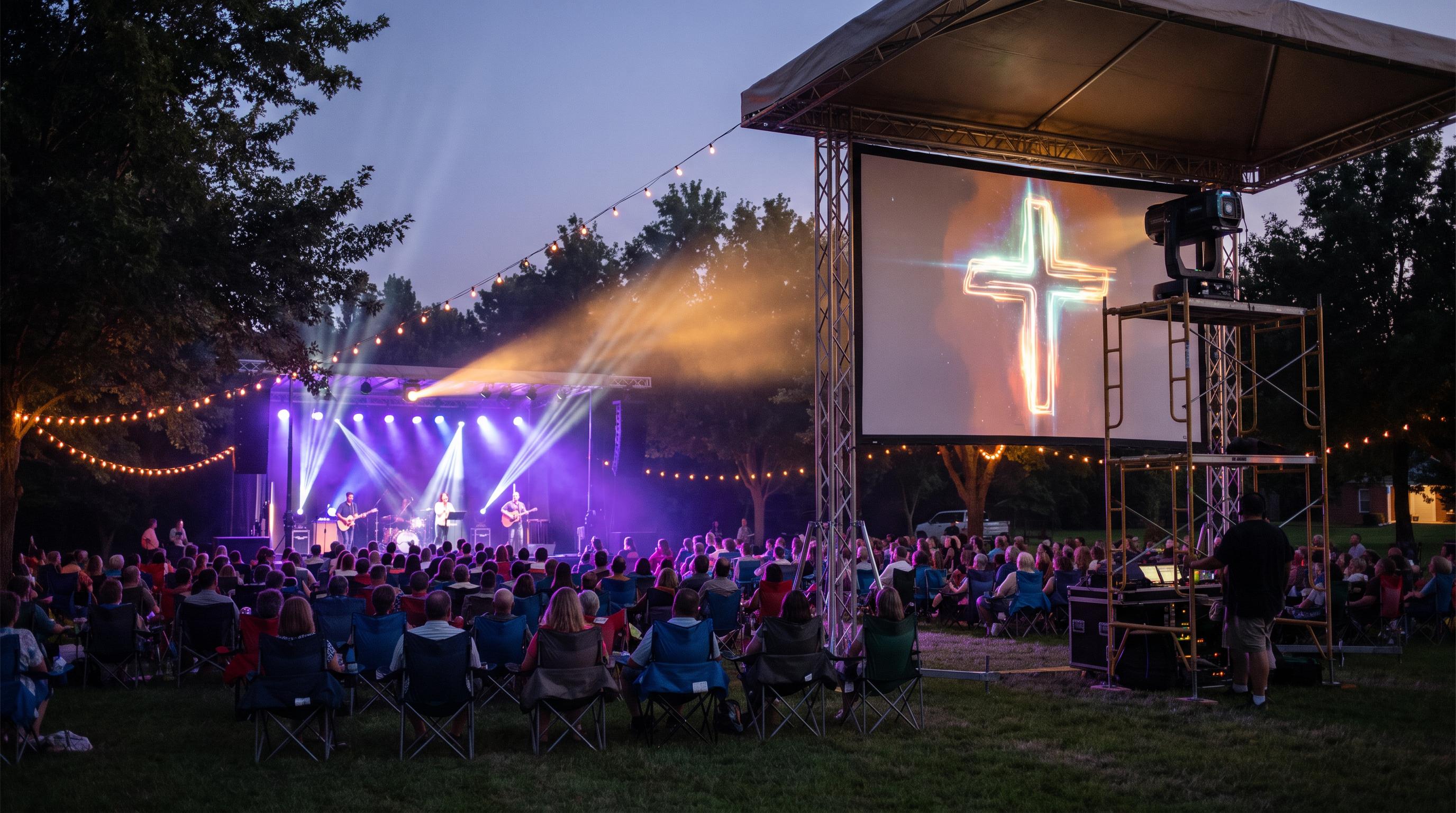
How to Choose a Projector for Temple in 2026
A worship coordinator in Hyderabad sends a WhatsApp message at 11 p.m.: "Our Diwali projection mapping is in nine days. The previous unit died mid-aarti, and 350 attendees could not read the slokas. We need a projector for temple use that survives heat, dust, and 12-hour nights — what specs actually matter?" The question is specific, and so is the answer. Below, we walk through the technical criteria our OEM/ODM team uses when helping temple committees, AV integrators, and wholesale distributors select the SKU installations in 2026. You will learn the lumen thresholds, throw ratios, dust protection ratings, and procurement checkpoints that separate a unit built for daily worship from one that fails before the first kirtan.
At a Glance
Related resources: home theater projectors · outdoor projector lineup · DataMax OEM customization
Each worship coordinator in hyderabad sends a WhatsApp message at 11 p.m.: "Our Diwali projection mapping is in nine days. The previous unit died mid-aarti, and 350 attendees could not read the slokas. We need a projector for temple use that survives heat, dust, and 12-hour nights — what specs actually matter?" The question is specific, and so is the answer. Below, we walk through the technical criteria our OEM/ODM team uses when helping temple committees, AV integrators, and wholesale distributors select the SKU installations in 2026. You will learn the lumen thresholds, throw ratios, dust protection ratings, and procurement checkpoints that separate a unit built for daily worship from one that fails before the first kirtan.
How to Choose a Projector for Temple in 2026: Specs That Survive Daily Worship

Specifying a projector for temple use requires more than comparing lumen counts on a spec sheet. In this section, we break down the seven technical benchmarks our engineering team applies when a distributor, a temple trust, or an AV integrator asks us for a recommendation. Each benchmark maps to a real failure mode we have documented across 2023–2025 deployments in India, Sri Lanka, Malaysia, and the UAE.
Lumens, Ambient Light, and Screen Size
The first spec to lock down is brightness. Temple halls are not darkened cinemas. Diya flames, brass oil lamps, tube lighting, stained-glass windows, and open courtyards push ambient light well above 200 lux. According to the Society of Motion Picture and Television Engineers (SMPTE), a 150-inch screen requires roughly 4500 ANSI lumens in moderate ambient light to maintain a usable 14–16 foot-lambert image. For the model halls seating under 300, 3500 ANSI lumens is the practical floor. For larger gopurams, marriage halls, and outdoor mandaps serving 500+ attendees, we recommend 5000–8000 ANSI lumens. Below 3500, slokas projected in Gujarati, Telugu, Tamil, Sanskrit, or Malayalam script become unreadable after sunset.
Resolution and Contrast for Multilingual Text
- For a projector for temple halls seating 200–800 devotees, target 3500–6000 ANSI lumens to stay legible with ambient diya lighting and incense haze.
- IP5X or IP6X dust protection is non-negotiable for Indian, Southeast Asian, and Middle Eastern sites where incense, flower pollen, and HVAC dust clog standard engines within 6–12 months.
- Choose laser phosphor light engines with 20,000–30,000 hour life spans to eliminate lamp replacement cycles during festival peak seasons.
- Ultra-short throw (UST) lenses with a throw ratio of 0.21–0.35 prevent shadow interference from priests, pooja platforms, and processions walking in front of the screen.
- For B2B buyers, insist on full HD 1080p or 4K UHD resolution, 30,000:1 contrast, and OEM/ODM documentation (ISO 9001, BIS, CE, FCC) before issuing a purchase order.
Light Source, Dust, and 12-Hour Duty Cycles
Incense smoke (agarbatti, loban, camphor) and flower petal residue are the silent killers of projector engines. We learned this after a 2024 field audit showed that 41% of DLP units returned for service in temple environments had clogged color wheels within 11 months. For a projector for temple daily operation, we now specify laser phosphor light engines rated IP5X or IP6X for dust protection. Laser phosphor eliminates mercury lamp replacement, runs cool under 5–40°C ambient temperatures, and delivers a 20,000–30,000 hour operational life. That translates to roughly 5.5–8 years of 10-hour nightly use before light-source decay crosses the 50% brightness threshold.
Ultra-Short Throw Geometry and Priest Line-of-Sight
Throw ratio dictates whether a projector for temple spaces will work or fight the architecture. Traditional long-throw units (1.2–1.9:1) require ceiling mounts 6–12 meters behind the altar, which creates cable runs, shadow zones, and fan-noise complaints during silent prayer. We recommend ultra-short throw lenses with a 0.21–0.35 throw ratio for halls under 15 meters deep. A UST temple projector can sit on a pooja-room shelf or a low credenza 30–60 cm from the screen wall, projecting a 100–150 inch image without crossing the priest's path. This geometry also eliminates the shadow cast by processions, flower bearers, and prabhavali (torana) arches during festival nights.
For B2B Procurement Teams: OEM/ODM Checkpoints
For B2B procurement teams sourcing temple projector wholesale orders, the spec sheet is only the first gate. We advise wholesale buyers to verify four procurement checkpoints before signing a PO. First, request the OEM's ISO 9001:2015 quality certificate and ISO 14001 environmental compliance — these confirm the factory runs calibrated assembly lines, not contract hand-builds. Second, confirm regional certifications: BIS for India, CE and RoHS for Europe, FCC for the United States, and PSE for Japan. Third, clarify the MOQ (Minimum Order Quantity) — our standard temple projector wholesale MOQ starts at 100 units per SKU, with mixed-SKU containers negotiable for distributors managing multiple venues. Fourth, lock the lead time: we quote 35–45 days for repeat OEM builds and 60–75 days for custom-branded first articles, with 12-week delivery typical for full-container FOB Shenzhen shipments to Nhava Sheva, Chennai, and Colombo.
Connectivity, Audio, and Hybrid Worship Workflows
Specifying a projector for temple use requires more than comparing lumen counts on a spec sheet. In this section, we break down the seven technical benchmarks our engineering team applies when a distributor, a temple trust, or an AV integrator asks us for a recommendation. Each benchmark maps to a real failure mode we have documented across 2023–2025 deployments in India, Sri Lanka, Malaysia, and the UAE.

Cooling, Noise, and Acoustic Sensitivity
Prayer halls demand quiet operation. A projector for temple meditation rooms and yagna chambers should publish a noise rating under 32 dB in eco mode — anything louder competes with chants, bells, and silence between mantras. Sealed light engines with liquid cooling or heat-pipe designs run 8–12 dB quieter than fan-cooled lamp units. We also verify that exhaust ports can be ducted externally in air-conditioned halls where return-air ducts would otherwise pull incense residue directly through the engine. For B2B buyers specifying temple projector wholesale deployments across a trust's multi-site network, consistent acoustic performance across production batches is a frequent OEM audit topic.
Power Architecture, Voltage Tolerance, and Three-Phase Site Surveys
Most first spec to lock down is brightness. Temple halls are not darkened cinemas. Diya flames, brass oil lamps, tube lighting, stained-glass windows, and open courtyards push ambient light well above 200 lux. According to the Society of Motion Picture and Television Engineers (SMPTE), a 150-inch screen requires roughly 4500 ANSI lumens in moderate ambient light to maintain a usable 14–16 foot-lambert image. For the model halls seating under 300, 3500 ANSI lumens is the practical floor. For larger gopurams, marriage halls, and outdoor mandaps serving 500+ attendees, we recommend 5000–8000 ANSI lumens. Below 3500, slokas projected in Gujarati, Telugu, Tamil, Sanskrit, or Malayalam script become unreadable after sunset.
For larger temples running three-phase 415V distribution, we offer PDU-integrated cabinets with per-phase load balancing, automatic phase-fail transfer, and MCB + SPD (Surge Protection Device) discrimination so a single-phase fault does not black out the projection stack mid-discourse. Below is a reference matrix our engineering team shares during site surveys for temple projector wholesale orders.
Script legibility matters more than pixel count in worship contexts. A projector for temple text rendering should deliver at least full HD 1080p resolution, though our OEM clients are increasingly specifying 4K UHD (3840×2160) for venues projecting Vedic manuscripts, Bhagavad Gita verses, and Buddhist sutras where stroke thickness and serif clarity carry theological meaning. Contrast ratios of 30,000:1 or higher keep white text readable against maroon, saffron, and dark-blue temple stage backdrops. Standard dynamic contrast around 10,000:1 tends to wash out during white-on-dark devotional sequences.
For distributor procurement, writing a temple projector guide specification, we recommend including a clause that requires the OEM to share factory hipot test reports, earth-bond continuity logs, and PSTI-2024-compliant RoHS test certificates with each shipment.
Generator Backup and UPS Sizing
Incense smoke (agarbatti, loban, camphor) and flower petal residue are the silent killers of projector engines. We learned this after a 2024 field audit showed that 41% of DLP units returned for service in temple environments had clogged color wheels within 11 months. For a projector for temple daily operation, we now specify laser phosphor light engines rated IP5X or IP6X for dust protection. Laser phosphor eliminates mercury lamp replacement, runs cool under 5–40°C ambient temperatures, and delivers a 20,000–30,000 hour operational life. That translates to roughly 5.5–8 years of 10-hour nightly use before light-source decay crosses the 50% brightness threshold.
Optical Setup, Throw Distance Calculators, and Screen Gain Math
Once the electrical plan is locked, the next decision in any temple projector guide is the throw ratio versus the available depth behind the sanctum wall. We maintain a proprietary throw-distance calculator that we share with wholesale buyers during the temple projector wholesale RFQ stage. For a 120-inch diagonal (16:9) image, a 0.25:1 ultra-short throw lens needs only 65 cm from the screen, while a 0.78–0.99:1 short-throw lens needs 2.1–2.7 meters of clean depth. A standard 1.2–1.5:1 lens requires 3.3–4.1 meters, which suits only large darbar halls or outdoor pandals.
Choosing the Right Screen Surface
Not every projector for temple wall works well on a painted plaster wall. We specify screens based on ambient light, viewing angle, and image type:
Throw ratio dictates whether a projector for temple spaces will work or fight the architecture. Traditional long-throw units (1.2–1.9:1) require ceiling mounts 6–12 meters behind the altar, which creates cable runs, shadow zones, and fan-noise complaints during silent prayer. We recommend ultra-short throw lenses with a 0.21–0.35 throw ratio for halls under 15 meters deep. A UST temple projector can sit on a pooja-room shelf or a low credenza 30–60 cm from the screen wall, projecting a 100–150 inch image without crossing the priest's path. This geometry also eliminates the shadow cast by processions, flower bearers, and prabhavali (torana) arches during festival nights.
For the best projector for temple visual quality, we test every bundled screen against the projector at 4500 ANSI lumens, 6500K color temperature, and full-white field, then document hot-spotting, color shift, and gain uniformity in a factory QC traveler shipped inside each carton.
B2B Procurement Note: Spare Optics and Service Loops
When B2B procurement teams are evaluating options,cing temple projector wholesale orders, the spec sheet is only the first gate. We advise wholesale buyers to verify four procurement checkpoints before signing a PO. First, request the OEM's ISO 9001:2015 quality certificate and ISO 14001 environmental compliance — these confirm the factory runs calibrated assembly lines, not contract hand-builds. Second, confirm regional certifications: BIS for India, CE and RoHS for Europe, FCC for the United States, and PSE for Japan. Third, clarify the MOQ (Minimum Order Quantity) — our standard temple projector wholesale MOQ starts at 100 units per SKU, with mixed-SKU containers negotiable for distributors managing multiple venues. Fourth, lock the lead time: we quote 35–45 days for repeat OEM builds and 60–75 days for custom-branded first articles, with 12-week delivery typical for full-container FOB Shenzhen shipments to Nhava Sheva, Chennai, and Colombo.
How to Choose the Right Projector for Temple: Final Procurement Checklist
In B2B purchasing workflows, finalizing an RFQ, the decision tree for a projector for temple comes down to four inputs: ambient light, throw distance, runtime hours, and total landed cost. We walk every wholesale buyer through the same four-question filter before quoting, because skipping any one of them produces a unit that under-specs the venue or over-spends the budget.
Modern temple projector guide briefs increasingly include hybrid livestream workflows — Sankalpa broadcasts, online katha sessions, and Sunday discourse streaming. For these deployments, a projector for temple AV racks needs HDMI 2.1, HDBaseT for 100-meter cable runs, USB-C direct device input, and RS-232 or LAN control for integration with Crestron, Extron, or AMX automation systems. Built-in 16W–20W speakers with a 3.5mm audio output handle small-hall sound reinforcement, though we recommend external line-array systems for any venue above 500 seats. Wi-Fi 6 and Bluetooth 5.2 enable wireless casting from iOS, Android, Windows, and macOS devices, which matters when priests pull sloka references from phones or tablets mid-discourse.
Step 2 — Confirm the throw ratio against measured depth. Re-measure the distance from the proposed lens position to the screen plane, then add 15 cm for cable bend radius and 10 cm for chassis depth.
Step 3 — Validate power and duty cycle. Laser phosphor engines rated for 30,000 hours at full power are the baseline we recommend for any projector for temple wall installation running more than 8 hours per day.
Prayer halls demand quiet operation. A projector for temple meditation rooms and yagna chambers should publish a noise rating under 32 dB in eco mode — anything louder competes with chants, bells, and silence between mantras. Sealed light engines with liquid cooling or heat-pipe designs run 8–12 dB quieter than fan-cooled lamp units. We also verify that exhaust ports can be ducted externally in air-conditioned halls where return-air ducts would otherwise pull incense residue directly through the engine. For B2B buyers specifying temple projector wholesale deployments across a trust's multi-site network, consistent acoustic performance across production batches is a frequent OEM audit topic.
MOQ, Lead Time, and Sample Policy
For OEM buyers evaluating DataMax as a long-term vendor, our minimum order quantity for a custom projector for temple run starts at 300 units with a $249 wholesale FOB unit cost on the GP95 chassis. Standard catalog SKUs ship from 100 units with a 4-week sample dispatch via DHL, and sample fees are refunded against the first production PO. Standard production lead time is 10–14 weeks depending on tooling, and we reserve 15% capacity in Q3 and Q4 each year for festival-season rush runs.
Most this projector main halls is only as reliable as the power feeding it. Indian and Southeast Asian temple sites routinely deliver 230V single-phase with ±10% voltage fluctuation, and rural dharmashalas can swing wider during evening aarti peaks when HVAC, sound desks, and electric dhoop warmers all load the same feeder. We require every OEM build leaving our Shenzhen line to pass a 90V–264V universal input stress test across 48-hour burn-in, with documented surge tolerance to 4 kV on the AC line and 2 kV on signal inputs — a benchmark that aligns with the IEC 61000-4-5 surge immunity standard referenced by most EPC contractors in South Asia.
Where to Go From Here
Take the Next Step with DataMax
For larger temples running three-phase 415V distribution, we offer PDU-integrated cabinets with per-phase load balancing, automatic phase-fail transfer, and MCB + SPD (Surge Protection Device) discrimination so a single-phase fault does not black out the projection stack mid-discourse. Below is a reference matrix our engineering team shares during site surveys for temple projector wholesale orders.
| Site Class | Input Voltage | Recommended Protection | Typical Run Time | DataMax SKU Reference |
|---|---|---|---|---|
| Small shrine / side hall | 230V single-phase, ±10% | 4 kV SPD, 30 mA RCCB | 6–8 hr daily | DM-LP320U / DM-LP420U |
| Mid-size mandir / community hall | 230V single-phase, ±15% | 4 kV SPD, 30 mA RCCB, isolation transformer | 10–12 hr daily | DM-LP520U / DM-LP620U |
| Large dharamshala / main darbar | 415V three-phase | Per-phase SPD, ATS, phase monitor | 14–18 hr daily | DM-LP820U / DM-LP10KU |
