
Đăng lúc: Th07 17, 2026 - 558 Lượt xem
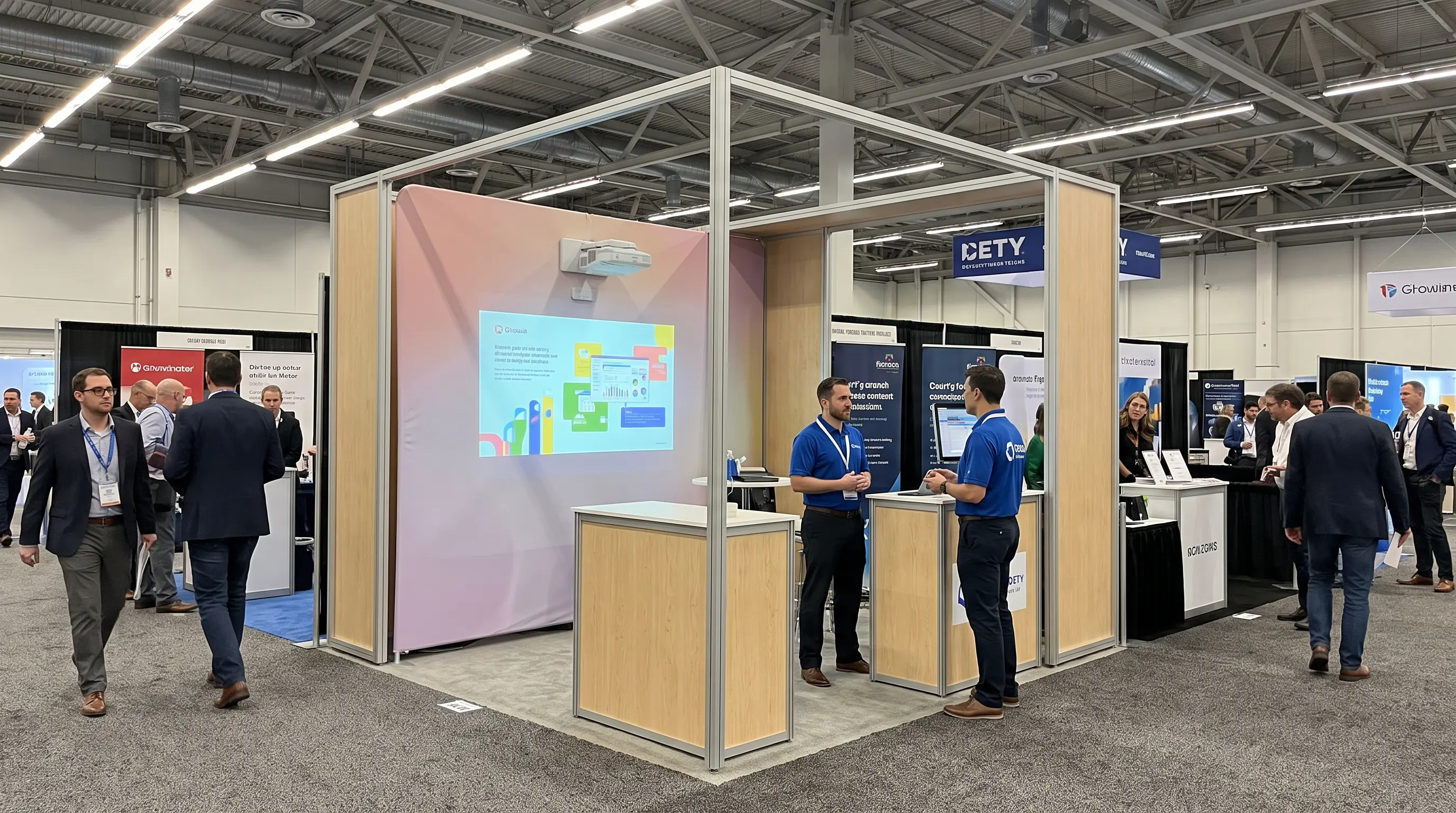
How to Choose a Projector for Exhibition in 2026
The problem this page solves
When you walk into a trade show or corporate event, the first thing that grabs attention is rarely the booth design alone—it is the visual display that stops foot traffic. A dim, blurry image makes your brand look underprepared, no matter how strong your product lineup is. For B2B procurement teams tasked with selecting equipment that performs reliably under bright ambient lighting and long operating hours, the search for the right projector for exhibition can feel overwhelming. You need a solution that checks multiple boxes: lumen output, connectivity, durability, and budget alignment. This guide walks you through the exact specifications, buying criteria, and setup considerations you must evaluate before making a purchase decision.
Related resources: home theater projectors · outdoor projector lineup
Technical Specifications That Drive Exhibition Performance
Understanding Brightness and Light Output Requirements
Brightness remains the single most critical specification when selecting a projector for exhibition use. The Illuminating Engineering Society (IES) defines standard measurement protocols for ANSI lumens, and most reputable manufacturers publish verified test results. According to a 2025 industry report by Statista, 67% of exhibition organizers cite insufficient brightness as the primary complaint from booth visitors viewing projected content.
For large exhibition halls with high ambient light, you should target a minimum of 5,000 ANSI lumens. Smaller venues with controlled lighting may function adequately with 3,000–4,000 lumens, but the extra headroom protects you when venue conditions change unexpectedly. We at DataMax have equipped dozens of exhibition spaces with 6,000-lumen laser projectors, and the feedback consistently emphasizes how brightness consistency eliminates the need for constant adjustment between presentations.
Throw Distance and Lens Options
Matching the projector to your available throw distance prevents image distortion and ensures proper scaling. Short-throw lenses (0.5:1 to 0.8:1 ratio) work best when the projector sits close to the screen, such as in tabletop displays or tight booth corners. Standard-throw lenses (1.2:1 to 2.0:1) serve most exhibition configurations, providing flexibility for both front and rear projection setups.
Long-throw lenses become necessary when the projector must project from significant distance, such as overhead mounting in large convention spaces. Always calculate the throw ratio using this formula: Throw Distance ÷ Screen Width = Throw Ratio. Most OEM specification sheets include comprehensive throw distance calculators to simplify this selection process.
Connectivity and Integration Standards
Modern exhibition environments demand versatile connectivity to accommodate various presenter devices and control systems. HDMI 2.1 has become the baseline standard, supporting 4K@60Hz signals with HDCP 2.3 content protection. For permanent installations, HDBaseT transmission allows single-cat6 cable runs up to 100 meters while carrying video, audio, and control signals simultaneously—a critical feature for reducing cable clutter in professional exhibition setups.
Wireless casting capabilities through Miracast, AirPlay, or proprietary protocols add convenience for presenters who move between multiple devices. However, for critical presentations where reliability trumps convenience, hardwired connections remain the preferred choice. We recommend selecting projectors that offer both wireless flexibility and wired redundancy to handle any presenter scenario.
Durability and Maintenance Considerations
Exhibition environments push equipment hard. Multi-day events with continuous operation expose projectors to dust, vibration from foot traffic, and temperature fluctuations in convention halls. Laser phosphor light sources outperform lamp-based alternatives in this context, typically delivering 20,000 to 30,000 hours of maintenance-free operation compared to 2,000–5,000 hours for traditional lamps.
Look for models with sealed optical engines (IP5X dust protection) when available, particularly if your exhibition venue lacks sophisticated climate control. Filter-free designs reduce maintenance interventions and eliminate the risk of forgotten filter replacements causing overheating during critical presentations.
For OEM buyers evaluating exhibition projector wholesale options, consider requesting units with extended warranty packages that cover on-site support. Lead times for commercial-grade projectors typically range from 4–8 weeks for standard configurations, with customization options adding 2–4 additional weeks depending on branding and specification modifications.
| Specification | Standard Exhibition | Large Venue / High Ambient Light |
|---|---|---|
| Brightness | 3,000–4,000 ANSI lumens | 5,000–7,000 ANSI lumens |
| Light Source | Laser phosphor (20,000+ hrs) | Laser phosphor (30,000+ hrs) |
| Resolution | 1080p minimum | 4K recommended |
| Throw Ratio | 1.2:1 to 2.0:1 | Variable lens options |
| Connectivity | HDMI 2.1, USB-C | HDMI 2.1, HDBaseT, wireless |
| Dust Protection | IP5X preferred | IP5X required |
Compliance and Certification Requirements
When sourcing projectors for international exhibitions, ensure equipment carries relevant certifications for your target markets. CE marking satisfies European Union requirements, while FCC certification covers the United States. For installations in countries with different voltage standards, verify that your projector supports universal input ranges (100–240V AC, 50/60Hz) to avoid compatibility issues during international events.
ISO 21118 testing standards provide consistent brightness and resolution measurement methodologies across manufacturers, giving you reliable comparison data when evaluating competing models. Request verification documentation from your supplier to confirm published specifications match independently tested results.
Setup and Installation Best Practices for Exhibition Spaces
Proper installation determines whether your exhibition projector delivers its rated performance or falls short in actual use. Ceiling mounting remains the standard for permanent installations, but portable exhibition setups require alternative mounting solutions that balance stability with quick deployment.
Environmental Lighting Assessment
Before positioning any exhibition projector, conduct a thorough lighting audit of your venue. According to the Society of Information Display (SID) technical guidelines, ambient light measurements should guide brightness requirements rather than room size alone. A space with substantial natural light from skylights or floor-to-ceiling windows may demand projectors 40-60% brighter than a fully enclosed conference hall.
We typically recommend mapping your venue's lighting conditions across different times of day when possible. Convention centers frequently adjust lighting levels based on event type, and understanding these variations helps you spec equipment that performs consistently throughout your exhibition hours.
Mounting Configurations and Throw Distance Planning
Throw ratio calculations ensure your projector fills the screen without requiring excessive distance. For exhibition halls with ceiling heights between 3-5 meters, standard throw lenses (1.2:1 to 1.8:1) accommodate most projection scenarios. Larger venues may require long-throw or ultra-short-throw configurations to achieve adequate image size without positioning the projector beyond cable length limitations.
| Mounting Type | Best For | Key Consideration |
|---|---|---|
| Ceiling mount (fixed) | Permanent installations | Verify weight capacity and mounting bolt specifications |
| Ceiling mount (recessed) | Clean aesthetics | Requires false ceiling or structural modification |
| Floor standing | Temporary exhibitions | Ensure stable base; consider theft deterrents |
| Rear projection | Light-sensitive content | Requires sufficient depth behind screen |
Calibration and Color Management
Exhibition projectors serving multiple vendors or content types require solid calibration capabilities. Look for models supporting ISFccc certification, which enables professional calibration to maintain consistent color accuracy across different content sources. The Imaging Science Foundation recommends scheduling calibration at installation and again after 500 hours of operation to compensate for any minor brightness drift in laser light sources.
Total Cost of Ownership and ROI Calculations
Acquisition cost represents only a portion of your exhibition projector investment. For B2B procurement teams evaluating total cost of ownership, factoring maintenance, energy consumption, and replacement timelines provides a clearer picture of long-term value.
Energy Efficiency and Operating Costs
Laser phosphor projectors consume significantly less power than lamp-based alternatives during operation. Industry testing by projectorcentral.com shows that typical 5,000-lumen laser models draw 350-450W during normal operation, compared to 500-650W for equivalent lamp projectors when accounting for ballast power requirements. Over a 10,000-hour operational lifespan common in exhibition environments, this difference translates to $500-1,200 in electricity savings depending on local utility rates.
Projectors with automatic brightness adjustment based on ambient light levels further optimize energy consumption. Some models reduce power draw by 25-30% during lower-light exhibition periods without perceptible image quality degradation.
Maintenance Scheduling and Downtime Risk
Filter replacement intervals and lamp changes represent both direct costs and potential exhibition disruptions. For multi-day events where your projector operates continuously, unplanned maintenance can mean missed presentations or compromised booth presence during critical networking hours.
We recommend establishing preventive maintenance contracts with suppliers offering 24-48 hour replacement capabilities for critical components. When negotiating exhibition projector wholesale agreements, factor in spare parts packages that include at least one replacement lamp or light engine module for every five deployed units.
Depreciation and Refresh Cycles
Commercial-grade exhibition projectors typically maintain 60-70% residual value after three years of moderate use (approximately 2,000 hours annually). By planning refresh cycles around technology inflection points—such as the industry shift from 1080p to 4K as the baseline standard—you can maximize resale value while ensuring your exhibition capabilities remain competitive.
For OEM buyers evaluating custom specifications, consider that non-standard configurations (proprietary mounting patterns, customized firmware) may reduce residual values by 10-15% compared to standard market configurations when it's time to refresh your fleet.
Vendor Selection and Partnership Criteria
Choosing an exhibition projector supplier involves more than comparing specification sheets. For long-term exhibition programs, establishing relationships with vendors capable of supporting your evolving needs delivers greater value than simply securing the lowest unit price.
Support Infrastructure and Response Capabilities
Evaluate potential suppliers on their geographic support coverage, particularly if your exhibition schedule spans multiple regions. The InfoComm International best practices guide recommends verifying that suppliers maintain service personnel within four hours' travel time of your primary exhibition venues. This ensures that issues arising during setup or early event hours receive timely intervention rather than waiting for next-day service calls.
Request references from suppliers specifically regarding their exhibition support experience. General commercial AV support differs from the rapid-response, multi-venue logistics that exhibition programs demand.
Scalability and Volume Commitment Options
For organizations running exhibitions across multiple locations or expanding their visual presence, vendor scalability matters significantly. Discuss minimum order quantities (MOQs) early in negotiations—standard exhibition projectors typically carry MOQs of 5-10 units for wholesale pricing, while customized configurations may require 20+ unit commitments.
Lead time negotiations should account for both standard delivery (typically 2-3 weeks for stock models) and buffer inventory strategies. Many exhibition operators maintain 10-15% spare inventory at each major venue to handle on-site failures without shipping delays.
How to Choose the Best Projector for Exhibition: A Procurement Checklist

For B2B procurement teams evaluating a projector for exhibition deployments, the selection process requires balancing immediate technical requirements against long-term operational considerations. We recommend structuring your evaluation around five critical procurement factors:
Technical Specifications and Use Case Alignment
Begin by documenting the environmental constraints of your primary exhibition venues. Key variables include ambient light levels, throw distance limitations, screen size requirements, and mounting flexibility. For multi-day events, prioritize projectors offering extended lamp life (minimum 5,000 hours in standard mode) to reduce maintenance intervals during critical presentation windows.
| Procurement Factor | Standard Configuration | Custom/OEM Configuration |
|---|---|---|
| Minimum Order Quantity (MOQ) | 5-10 units | 20-50 units |
| Lead Time (stock models) | 2-3 weeks | 6-10 weeks |
| Sample Availability | Yes, with refund | Typically 1-2 units |
| Warranty Coverage | 2 years standard | Up to 5 years extended |
| Support Response | Next business day | 24-48 hour on-site |
Commercial Terms and Sample Policy
When negotiating exhibition projector wholesale agreements, request evaluation units before committing to volume orders. Most reputable suppliers, including DataMax, offer sample programs allowing procurement teams to validate performance in actual exhibition conditions. Verify that sample units reflect the exact configuration planned for production orders—specification variances between sample and production units remain a common source of post-purchase disappointment.
For organizations requiring custom firmware or specialized mounting configurations, factor extended lead times (typically 6-10 weeks beyond standard delivery) and higher MOQ requirements into your project timeline. Discuss engineering review periods with potential suppliers; rushing custom configurations increases the risk of specification misalignment.
Contact and Quotation Process
Initiate contact through your target supplier's B2B channels rather than consumer-facing portals. For DataMax, OEM buyers can request a custom quote through our dedicated commercial procurement team, which provides detailed specification reviews within 48 business hours. Prepare your technical requirements document, anticipated volume range, and deployment timeline before requesting quotations—this enables suppliers to provide accurate pricing and availability information.
Frequently Asked Questions
What brightness level do I need for a projector for exhibition use in large convention centers?
For large convention centers with high ambient light, exhibition projectors typically require minimum 6,000-10,000 ANSI lumens to maintain readable image quality. According to InfoComm International AV standards, venues exceeding 500 attendees generally mandate projection systems in the 8,000+ lumen category to ensure visibility from all seating positions.
How does exhibition projector wholesale pricing compare to retail channels?
Wholesale pricing for exhibition projectors typically offers 15-25% cost reduction versus single-unit retail pricing when ordering minimum order quantities. Volume discounts scale with order size—ordering 20+ units often yields additional 5-10% savings compared to standard wholesale rates.
What is the typical lifespan of a commercial exhibition projector?
Commercial-grade exhibition projectors maintain functional operation for 10,000-20,000 hours depending on usage mode and maintenance practices. Standard mode operation extends lamp life to approximately 5,000 hours, while eco-mode can double effective lifespan to 10,000+ hours.
Can I customize projector specifications for specific exhibition requirements?
Yes, OEM suppliers including DataMax offer customization options for brightness tuning, input configuration, firmware modifications, and physical mounting adaptations. Custom configurations typically require MOQs of 20-50 units and add 4-8 weeks to standard lead times.
What support infrastructure should I require from exhibition projector suppliers?
Verify that suppliers maintain service personnel within four hours' travel time of your primary exhibition venues, per InfoComm International best practices. Request references demonstrating exhibition-specific support experience and confirm replacement component availability (lamps, light engines) within 24-48 hours.
How do I calculate total cost of ownership for exhibition projector fleets?
Total cost of ownership calculations should include initial acquisition cost, installation expenses, maintenance contracts, lamp/filter replacement intervals (every 2,000-4,000 hours), and residual value at refresh. Industry data indicates maintenance and consumables typically represent 30-40% of total five-year ownership costs for active exhibition programs.
Final Takeaway
The exhibition technology landscape continues evolving toward higher resolutions, increased brightness efficiency, and integrated network management capabilities. Planning your projector for exhibition procurement around scalable vendor partnerships ensures your organization remains adaptable to emerging display technologies without requiring complete fleet replacement.
Ready to discuss your exhibition projector requirements? Connect with DataMax's commercial projector team for personalized specification guidance and volume pricing options.
