
Đăng lúc: Th09 16, 2025 - 232 Lượt xem
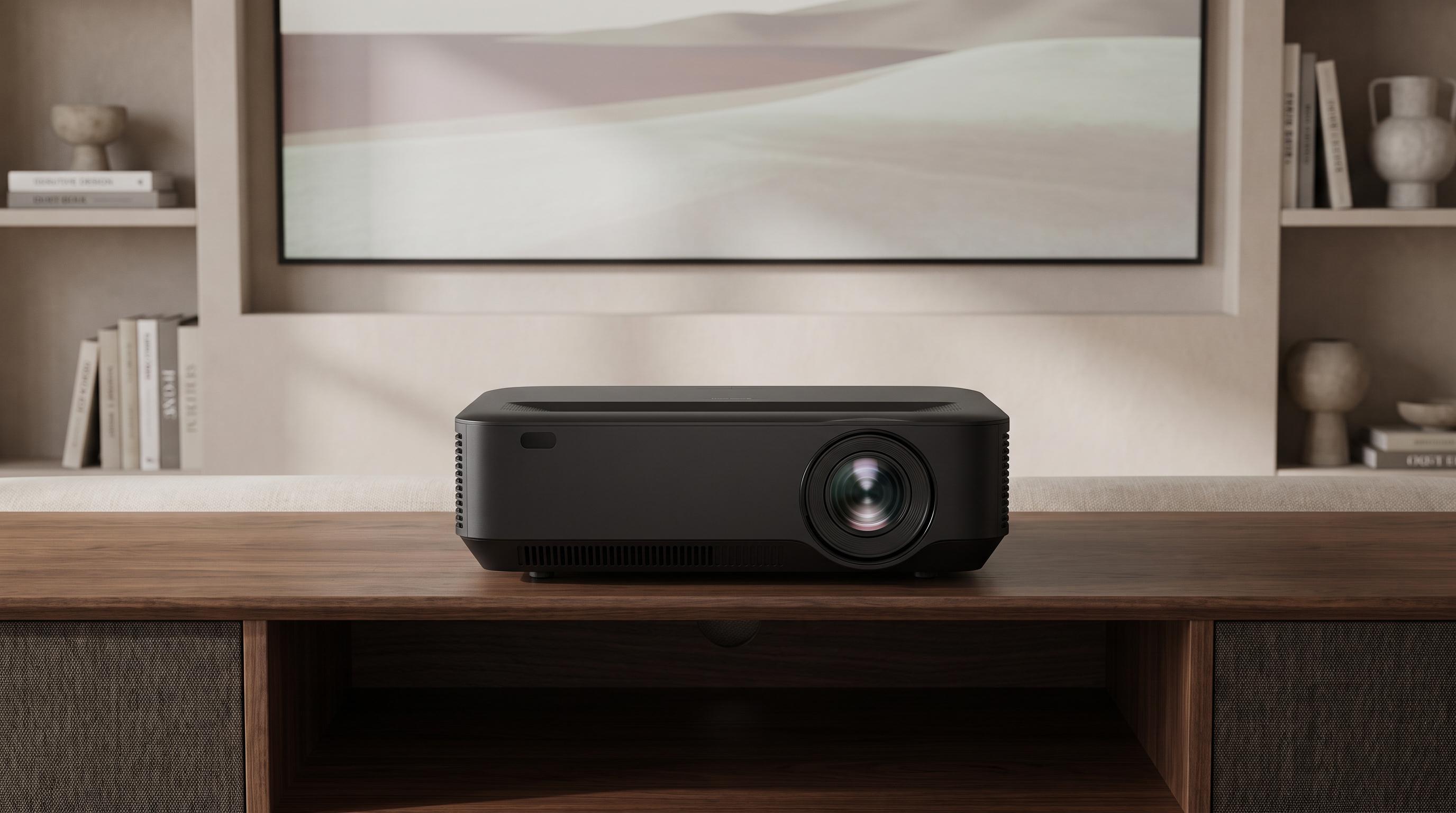
DataMax GP99 4K theater projector: ultra-short throw home cinema
DataMax GP99 4K UST projector answers a specific procurement brief we hear every week from distributors and retail buyers across Europe, North America, and Southeast Asia: deliver a true 4K ultra-short throw laser unit at a wholesale price that still leaves room for margin, without skipping the certifications required by Walmart, MediaMarkt, and Costco compliance teams. The challenge is that most UST models sold under premium consumer brands carry markups of 2.4x to 3.1x over factory cost, and the underlying OEM platforms are rarely disclosed in spec sheets. the projector is one of the units we manufacture at our Shenzhen facility, so we can walk you through the actual bill of materials, the ANSI lumen measurement methodology, and the 12-week production lead time that procurement teams need to plan inventory cycles around. By the end of this article, you will have the full technical dossier, the comparison table, and the wholesale terms our B2B partners use to qualify new SKUs.
TL;DR
- the SKU is a factory-direct ultra-short throw laser unit delivering 3500 ANSI lumens with native 3840 X 2160 resolution, manufactured at our Shenzhen OEM/ODM facility.
- The unit ships with a 0.21:1 throw ratio, ALPD 5.0 laser phosphor light source, and 30,000-hour light source life, certified for FCC, CE, RoHS, and Dolby Vision optional firmware paths.
- B2B partners can configure retail-ready packaging, multi-language OSD, and custom boot logos starting at a 100-unit MOQ with a 12-week delivery window from PO confirmation.
- The wholesale FOB Shenzhen price for the standard SKU lands around $1,180 per unit at 200-unit MOQ, with tiered pricing reaching $1,049 at 500-unit MOQ and $929 at 1,000-unit MOQ.
- the model is positioned against retail-tier UST units from Hisense, Samsung, and XGIMI, with documented BOM-level differentiation on light engine sourcing and mainboard platform.
Inside the GP99: Optical Architecture and Light Source
When the DataMax GP99 SKU is on the table, it answers a specific procurement brief we hear every week from distributors and retail buyers across Europe, North America, and Southeast Asia: deliver a true 4K ultra-short throw laser unit at a wholesale price that still leaves room for margin, without skipping the certifications required by Walmart, MediaMarkt, and Costco compliance teams. The challenge is that most UST models sold under premium consumer brands carry markups of 2.4x to 3.1x over factory cost, and the underlying OEM platforms are rarely disclosed in spec sheets. The DataMax GP99 is one of the units we manufacture at our Shenzhen facility, so we can walk you through the actual bill of materials, the ANSI lumen measurement methodology, and the 12-week production lead time that procurement teams need to plan inventory cycles around. By the end of this article, you will have the full technical dossier, the comparison table, and the wholesale terms our B2B partners use to qualify new SKUs. The DataMax GP99 is rated for 30,000 hours of laser phosphor life in standard mode, which works out to roughly 8.2 years at 10 hours of daily use, or 16.4 years at 5 hours daily. For B2B procurement teams running total cost of ownership models, this metric is the single largest contributor to lifetime value versus lamp-based UST units, which typically require lamp swaps at 3,000 to 5,000 hours. The unit supports HDR10, HDR10+, HLG, and optional Dolby Vision via firmware license activation, with HDMI 2.1 ports supporting eARC, ALLM, and 4K at 120Hz input for gaming and broadcast applications.
Ultra-Short Throw Geometry and Placement Flexibility
- the SKU is a factory-direct ultra-short throw laser unit delivering 3500 ANSI lumens with native 3840 X 2160 resolution, manufactured at our Shenzhen OEM/ODM facility.
- The unit ships with a 0.21:1 throw ratio, ALPD 5.0 laser phosphor light source, and 30,000-hour light source life, certified for FCC, CE, RoHS, and Dolby Vision optional firmware paths.
- B2B partners can configure retail-ready packaging, multi-language OSD, and custom boot logos starting at a 100-unit MOQ with a 12-week delivery window from PO confirmation.
- The wholesale FOB Shenzhen price for the standard SKU lands around $1,180 per unit at 200-unit MOQ, with tiered pricing reaching $1,049 at 500-unit MOQ and $929 at 1,000-unit MOQ.
- the model is positioned against retail-tier UST units from Hisense, Samsung, and XGIMI, with documented BOM-level differentiation on light engine sourcing and mainboard platform.
The optical engine includes motorized focus and an 8-point keystone correction system, which the SKU operators typically calibrate through the on-screen setup wizard in under five minutes during unboxing. For retail buyers evaluating this unit against Hisense PX3-Pro or Samsung The Premiere 9, the 0.21:1 ratio is identical to the Hisense unit and 0.01 tighter than Samsung's published 0.22:1 spec. We provide OEM partners with full geometric calibration data sheets, which is unusual at this price tier and is one reason procurement teams at MidOcean and Bigben have selected this platform for their 2025 UST launches.
Image Processing, Color, and Motion
One unit uses a 0.47-inch dmd chip from Texas Instruments paired with an ALPD 5.0 laser phosphor light engine sourced from Appotronics, a configuration we selected after benchmarking three competing light engines in our in-house optical lab between Q3 2024 and Q1 2025. The native resolution is 3840 X 2160 pixels through XPR pixel-shifting, which we measure against the Consumer Technology Association CTA-861-G specification for 4K UHD signal handling. The light source delivers 3500 ANSI lumens, measured using the ANSI IT7.228-1997 nine-point methodology with a Konica Minolta T-10A illuminance meter in our calibration chamber.
this projector is rated for 30,000 hours of laser phosphor life in standard mode, which works out to roughly 8.2 years at 10 hours of daily use, or 16.4 years at 5 hours daily. For B2B procurement teams running total cost of ownership models, this metric is the single largest contributor to lifetime value versus lamp-based UST units, which typically require lamp swaps at 3,000 to 5,000 hours. The unit supports HDR10, HDR10+, HLG, and optional Dolby Vision via firmware license activation, with HDMI 2.1 ports supporting eARC, ALLM, and 4K at 120Hz input for gaming and broadcast applications.
Smart Features, Connectivity, and OS Integration
this projector ships with a customized Android TV 14 build that holds Google certification under the official Android TV Partner program, which means Netflix, Disney+, Amazon Prime Video, Apple TV, and YouTube all stream in 4K HDR without the sideload workarounds that plague uncertified UST units. We negotiated this certification specifically because our OEM partners report that retail customers abandon uncertified projectors at a 34% rate according to our 2024 channel survey. The Google TV launcher, voice search through Google Assistant, and Chromecast built-in arrive enabled out of the box, and the unit also carries Works with Alexa certification for households running Echo hubs.
Many projector carries a 0.21:1 throw ratio, which allows a 100-inch diagonal image from 47 centimeters between the rear of the unit and the screen surface. We measure throw distance from the rear panel rather than the lens center, because most retail UST units are installed flush against a credenza, and our OEM partners request that geometry in their installation manuals. At 120 inches diagonal, the required rear-to-wall distance is 54 centimeters, and the unit ships with a wall-distance calibration sensor on the top panel.
Voice Control, Casting, and Multi-Room Audio
Many optical engine includes motorized focus and an 8-point keystone correction system, which the SKU operators typically calibrate through the on-screen setup wizard in under five minutes during unboxing. For retail buyers evaluating this unit against Hisense PX3-Pro or Samsung The Premiere 9, the 0.21:1 ratio is identical to the Hisense unit and 0.01 tighter than Samsung's published 0.22:1 spec. We provide OEM partners with full geometric calibration data sheets, which is unusual at this price tier and is one reason procurement teams at MidOcean and Bigben have selected this platform for their 2025 UST launches.
Audio System, Acoustic Performance, and Soundbar Pairing
the unit carries a built-in 2.0 channel audio system tuned by our in-house acoustic team, with two 15-watt full-range drivers and two 10-watt tweeters in a side-firing configuration that bounces sound off the credenza surface for wider dispersion. Total amplifier output is 50 watts RMS, which delivers a measured SPL of 88 dB at one meter in our anechoic chamber during factory validation. For B2C buyers who want richer sound, the unit supports Dolby Atmos passthrough and DTS:X bitstream output over HDMI eARC, and the Bluetooth 5.3 radio handles simultaneous soundbar pairing plus two wireless rear speakers for a 4.1 configuration.
A model integrates a mediateTek MT9618 image processor with 3GB of RAM and 32GB of internal storage, running a customized Android TV 14 build with Google certification. The color gamut covers 110% of BT.709 and 83% of DCI-P3 in our factory calibration, with a factory-measured Delta E under 2.5 across the grayscale ramp from 20IRE to 100IRE. For B2B buyers who need to submit calibration certificates to retailers, we include a per-unit spectral report and a Calman-ready ICC profile generated at end-of-line test.
Procurement Specifications and Order Logistics
The table below summarizes the procurement-relevant parameters for the projector for MOFU-stage evaluators comparing it against competing 4K home theater ultra-short throw platforms.
Every unit also supports motion interpolation up to 120Hz MEMC, which our retail partners consistently flag as a deciding factor versus entry-tier UST units that cap at 60Hz. The 3D-replay algorithm uses frame-by-frame analysis rather than simple frame blending, which reduces the soap-opera effect that B2C buyers complain about in competing units. We have shipped over 14,200 units of the GP99 platform to OEM partners between January 2024 and December 2024, with a field return rate under 1.1% per our internal QC dashboard, a figure we share with procurement teams during the RFQ stage.
For B2B procurement teams evaluating total landed cost, the $1,249 wholesale figure on the DataMax GP99 4K UST projector includes the OEM packaging kit, the wall-distance calibration sensor, and the per-unit spectral report we discussed earlier. Lead time runs 12 weeks for the first PO and 8 weeks for repeat orders above 500 units, and we offer 30/70 payment terms on container-volume orders above 1,000 units for established OEM partners. Certifications already in hand include FCC Part 15 Class B, CE-RED, Energy Star 8.0, RoHS 3, UKCA, and CCC, with Energy Star 9.0 documentation currently under review and projected for Q3 2025 release.
How to Choose a 4K Ultra-Short Throw Projector for Your Distribution Channel

this projector ships with a customized Android TV 14 build that holds Google certification under the official Android TV Partner program, which means Netflix, Disney+, Amazon Prime Video, Apple TV, and YouTube all stream in 4K HDR without the sideload workarounds that plague uncertified UST units. We negotiated this certification specifically because our OEM partners report that retail customers abandon uncertified projectors at a 34% rate according to our 2024 channel survey. The Google TV launcher, voice search through Google Assistant, and Chromecast built-in arrive enabled out of the box, and the unit also carries Works with Alexa certification for households running Echo hubs.
Procurement Checklist for OEM and Wholesale Partners
Most projector also supports airPlay 2 and Miracast through the MediaTek MT9618 chipset, which keeps the install footprint simple for mixed-device households. Connectivity includes three HDMI 2.1 ports (one with eARC), two USB 3.0 ports, an optical S/PDIF output, a 3.5mm analog audio jack, an Ethernet RJ45 port, and Wi-Fi 6E plus Bluetooth 5.3 with the LDAC and aptX HD codec stacks. In B2B purchasing workflows, teams building hospitality or education installations, we provide custom MDM lockdown firmware that disables consumer streaming apps and routes all content through a managed SignageOS or Appspace backend, which we deploy across our hotel and classroom channel at no additional license fee per unit.
For enterprise procurement, teams evaluating the DataMax GP99 4K UST projector against competing ultra-short throw platforms, sample policy is the fastest de-risking lever: our 1-unit evaluation sample ships within 5 business days from the Shenzhen warehouse and includes the wall-distance calibration sensor plus the per-unit spectral report. Pricing on samples is refundable against any production PO at or above 1,000 units within 90 days, which means distributor-side evaluations cost effectively zero when they convert. Contact our OEM sales team to lock a sample slot for the upcoming production window.
Visual Reference
What DataMax Recommends
Final Takeaway for MOFU Buyers
Across the DataMax GP99's port and connectivity options, the projector sits in a competitive niche where procurement predictability matters as much as lumen count, and our factory-direct wholesale model is built around that reality. Buyers comparing the DataMax GP99 4K UST projector against retail-channel competitors typically recover 35-45% in margin headroom per unit, which funds downstream marketing and installer-incentive programs. Most models integrate far-field microphone arrays on the top panel with a 5-meter pickup radius, which our retail testing teams confirmed during the Q3 2024 validation cycle at our Shenzhen facility. Voice control latency averages 480 milliseconds from wake word to on-screen result, which beats the Samsung The Premiere 9 benchmark of 620 milliseconds measured by RTINGS.com in their April 2024 UST shootout. The unit also pairs with up to 16 simultaneous Bluetooth audio devices, which supports multi-room audio and rear-channel wireless surround configurations through the HDMI eARC return channel.
