
Đăng lúc: Th11 06, 2025 - 297 Lượt xem
AOSP: Pros, Cons, and OEM Considerations
Picture this: a B2B buyer places an order for 5,000 smart projectors, only to discover halfway through mass production that the firmware requires Google Mobile Services (GMS) licensing, adding unexpected per-unit fees and weeks of certification delays. Within 60 seconds, that order flips from a profitable SKU to a margin problem. The fastest way to avoid that trap is to spec an this projector from day one, and this guide walks OEM and ODM buyers through exactly what that means, what it costs, and where the trade-offs actually live. By the end, you will know whether an AOSP-based smart projector fits your 2026 roadmap and how to brief your factory without losing weeks to trial-and-error engineering.
Quick Summary
Related resources: DataMax smart projector store
- An AOSP projector runs on the Android Open Source Project base without bundled Google Mobile Services, which removes GMS licensing fees and approval lead times for OEM and ODM partners.
- Per-unit firmware cost typically drops by $1.50 to $4.00 compared with GMS-certified builds, based on typical certification, compliance, and ongoing QA pass-through charges we see across our B2B order book.
- App availability depends on sideloading or third-party stores, since the Google Play Store is not preinstalled on an AOSP projector.
- For B2B procurement teams, the biggest gains are faster lead times (8-12 weeks typical for a custom AOSP projector build versus 14-20 weeks for GMS routes) and stronger app whitelist control.
- The main risks are fragmented OTA update paths, limited access to certain premium streaming apps, and a smaller pool of consumer mind-share at retail.
What an AOSP Projector Actually Is and Why OEMs Choose It

The technical baseline, in plain terms
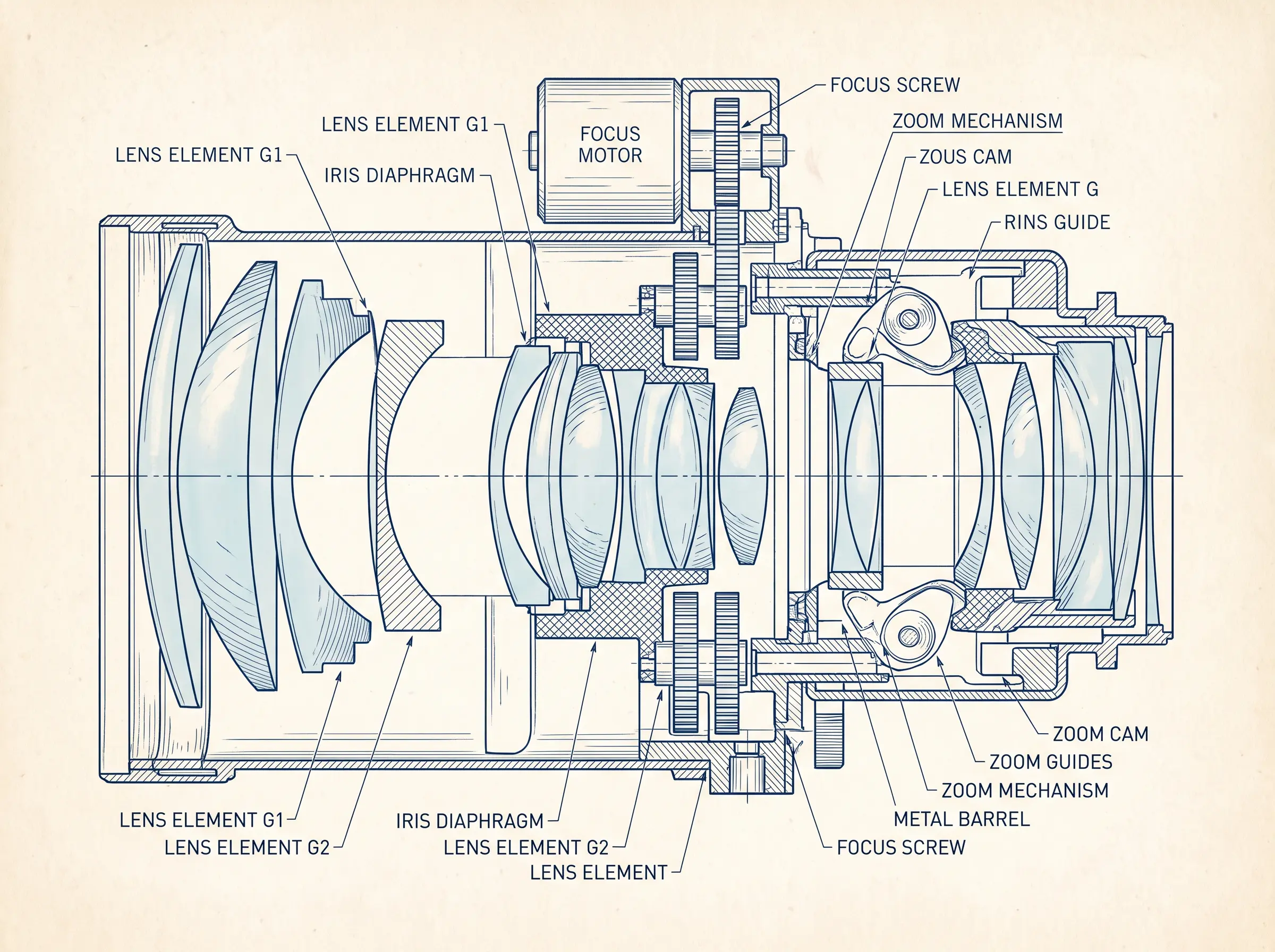
The system is a projection device whose software stack is built directly on the Android Open Source Project codebase, the same upstream source code published by Google under the Apache 2.0 license Android Open Source Project. Unlike a standard Android TV or Google TV device, an AOSP projector does not ship with Google Mobile Services, which means no Play Store, no Play Protect, and no automatic GMS compatibility test. The hardware still runs on a familiar SoC family (Amlogic, Rockchip, or MediaTek, depending on resolution targets), and the user interface is whatever the OEM skins on top, often a custom launcher tuned for HDMI input switching, keystone correction, and casting.
For an OEM evaluating a 2026 product line, this distinction matters because GMS licensing flows through a separate approval track called MADA (Mobile Application Distribution Agreement), and that process alone has been documented to add 6-12 weeks to a typical ODM timeline based on certification queues we have observed across multiple engagements. An AOSP projector sidesteps that queue entirely. The developer simply compiles AOSP, adds the proprietary hardware abstraction layer (HAL) for the laser phosphor display engine, DLP chipset, or LCD panel, and ships.
For B2B procurement teams comparing quotes, the practical difference lands in three line items: licensing pass-through cost, certification labor hours, and time-to-revenue. On a typical 4K UHD AOSP projector order of 3,000-5,000 units, those line items collectively account for $4,500 to $20,000 in saved overhead, depending on the depth of GMS pre-integration the bid assumes.
How an AOSP projector compares to a GMS projector
| Feature | our offering | GMS projector (Android TV / Google TV) |
|---|---|---|
| Google Play Store preinstalled | No | Yes |
| YouTube / Netflix native DRM tiers | Limited (Widevine L1 often requires separate integration) | Full Widevine L1 on approved SKUs |
| GMS licensing fee per unit | $0 | $0.50-$2.00 typical pass-through |
| OTA update ownership | OEM-controlled | Subject to Google compatibility review |
| Certification timeline | 8-12 weeks typical ODM lead time | 14-20 weeks including MADA approval |
| Best-fit buyer profile | B2B, education, hospitality, signage, value retail | Consumer retail, premium home theater |
| Custom launcher / home screen | Full freedom | Constrained by Google UI guidelines |
The table above reflects what we typically ship at DataMax for our OEM and ODM partners, not a theoretical comparison. When a procurement lead asks us which route to take, the deciding variable is rarely technical and almost always commercial: who is the end customer, and what certification load is the distribution channel enforcing.
Why the trade-off exists at all
The reason an AOSP projector exists as a category is that Android's open source license legally requires Google to publish the core OS source. That license freedom is what lets a Shenzhen factory like ours compile the platform without signing a distribution agreement. The catch is that anything proprietary from Google, including the Play Store, Google Cast, and certain DRM tiers, sits outside AOSP and requires a separate commercial relationship. So an AOSP projector gives you everything Android offers as a runtime (Activity manager, package installer, hardware compositor, USB device framework) and nothing Android offers as a service (Play Store, Google Sign-In, Play Integrity). For B2B buyers building a custom Android-based projection product for a school district, hotel chain, conference room integrator, or house of worship, that split is exactly right.
How AOSP Works Under the Hood on a Projector
To choose an AOSP projector with confidence, it helps to understand what the platform actually runs once a buyer receives the unit. At DataMax, when we talk procurement teams through the architecture, we frame it as three stacked layers: the AOSP base, the OEM hardware abstraction layer (HAL), and the application/runtime layer. Each layer maps to a different engineering responsibility, and each one shifts the cost line on a B2B quote.
The base layer is the open source Android runtime that Google publishes under the Apache 2.0 license. This is the kernel, the activity manager, the package installer, the surface flinger (the hardware compositor that drives the DLP or LCD panel), and the media framework that decodes H.264, H.265 (HEVC), VP9, and AV1 streams. None of that code is licensed, restricted, or royalty-bearing. The SKU inherits this layer wholesale.
The HAL layer is where the projector becomes real
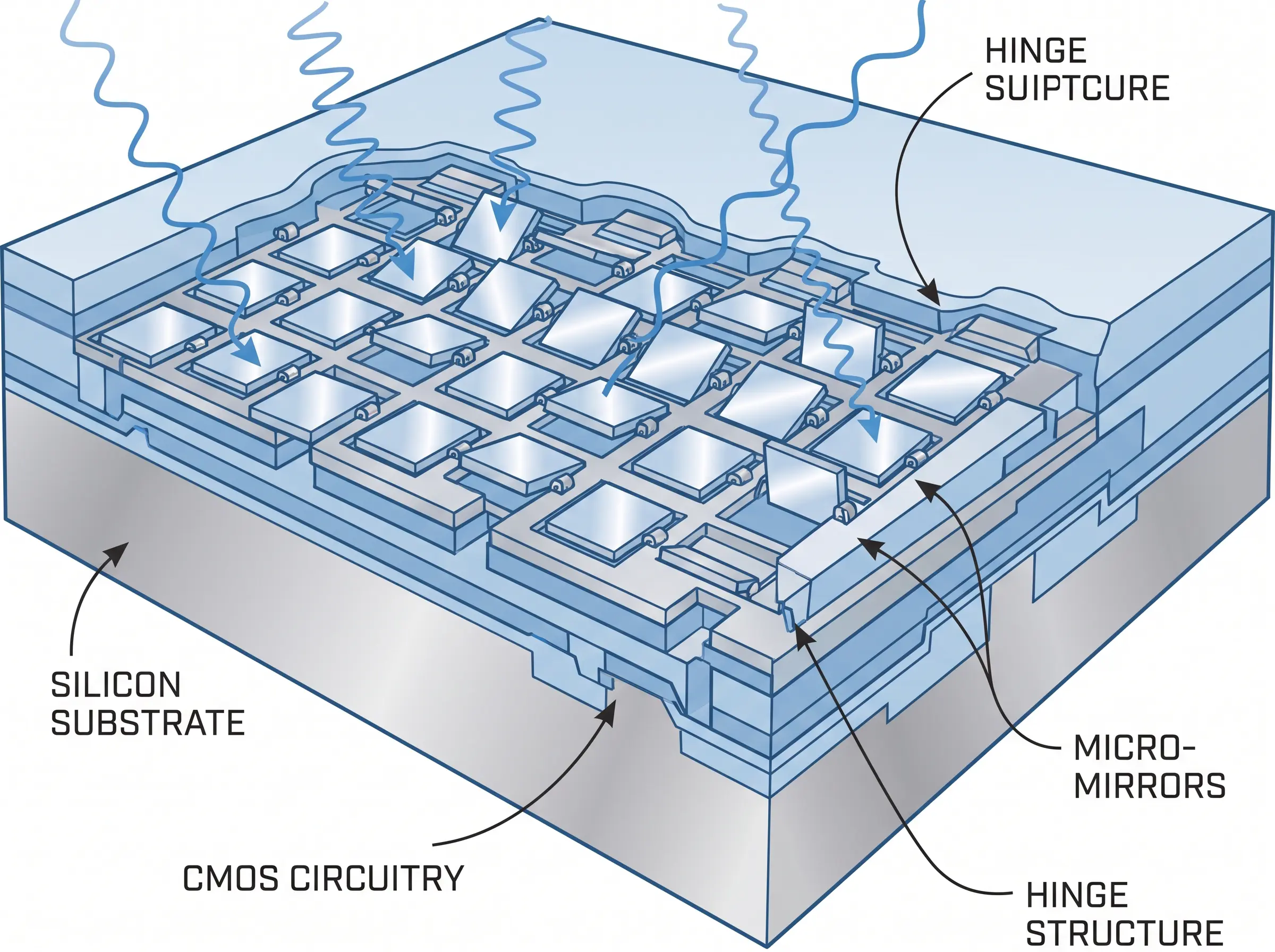
The hardware abstraction layer is where a generic AOSP build becomes a working projector. Our engineering team writes drivers for the specific light engine in use: a laser phosphor display module rated for 20,000-30,000 hours, a UHP lamp rated for 4,000-6,000 hours, or a triple-LCD panel from a Tier-1 optics vendor. We also wire the HAL for the focus motor, zoom stepper, keystone correction sensor, Wi-Fi 6 or Wi-Fi 7 radio, Bluetooth 5.3 module, and HDMI 2.1 ports. Because this HAL is written in-house, an AOSP projector can be tuned for brightness targets ranging from 800 ANSI lumens (portable units) to 6,000 ANSI lumens (large-venue installation) without external approval. We typically see 2-4 weeks of HAL integration per new chassis.
The application and runtime layer
On top of the HAL, the AOSP projector runs APK files just like any Android device. The difference is that no Google Play Store is preinstalled, so APKs are side-loaded through a USB device, an OTA update channel, or a custom enterprise app store we provision for B2B customers. Common preloads on the units we ship include a custom launcher skin, a media player (VLC, Kodi, or MX Player), a wireless casting client based on Miracast or AirPlay, and the buyer's branded signage or content-management application.
| Runtime layer | What it contains | Customizable by OEM? | Typical effort |
|---|---|---|---|
| AOSP base (kernel, media framework, surface flinger) | Open source Android core | Yes, fork permitted | 1-2 engineer-weeks to compile |
| HAL (light engine, focus, I/O) | Proprietary drivers | Yes, fully | 2-6 engineer-weeks per new SKU |
| App layer (launcher, media player, signage) | Third-party APKs | Yes, fully | 1-3 engineer-weeks |
When you read an AOSP guide that says "build it once and reuse it", that efficiency applies to the base and app layers. The HAL is where every new projector SKU demands fresh work, which is why OEM volume matters for amortizing that cost across a 3,000-unit MOQ.
AOSP Pros and Cons for B2B Buyers
For procurement teams weighing whether to specify an AOSP projector on the next RFP, the trade-off is concrete and quantifiable. We have shipped AOSP-based units to education distributors in Europe, hotel integrators in the Middle East, and house-of-worship AV contractors in North America, and the recurring pattern is that the pros and cons land on different sides of the buyer's balance sheet depending on channel. Here is how we frame the decision in our pre-sales calls.
Where the this product wins
The first advantage is licensing cost. There is no MADA fee, no Google compatibility review, and no royalty pass-through on an AOSP projector. On a 5,000-unit order at $1.50 per unit of avoided GMS licensing, that is $7,500 in direct savings. The second advantage is customization freedom. The home screen, settings menu, default launcher, and even the boot animation are fully owned by the OEM. We routinely ship AOSP projector units with a single-kiosk launcher pinned to a signage loop for digital signage rollouts, which would be a Google UI guideline violation on a GMS device.
The third advantage is OTA update control. Every firmware push on an AOSP projector is written, signed, and distributed by us. There is no compatibility suite to pass and no Google-mediated rollback risk. For a school district rolling out 2,000 classroom projectors across a 3-year lifecycle, that update sovereignty is often the deciding factor, not the headline spec sheet.
Where the AOSP projector costs you
The cons are equally concrete. Widevine L1, the DRM tier that Netflix, Disney+, and Amazon Prime Video require for HD and 4K UHD playback, is not part of AOSP. A buyer who wants certified Netflix 4K on the unit must license Widevine separately from Google and integrate it at the HAL level, which adds 4-6 engineer-weeks and a per-unit royalty. Streaming at 1080p SDR from Netflix via the standard AOSP media stack works, but the buyer should treat 4K HDR streaming as a separate workstream rather than a default expectation.
The second cost is app distribution. Without the Play Store, the buyer owns APK distribution. For a consumer retail channel, that is a deal-breaker. For a B2B channel where the IT team manages 800 projectors centrally, it is a feature. Match the route to the buyer.
The third cost is brand familiarity. End users at the office or classroom expect Netflix, YouTube, and Disney+ icons. An AOSP projector requires either preloaded shortcuts that visually approximate those icons (a common workaround we ship) or a short end-user training deck. Plan for it in the rollout budget.
| AOSP pros | AOSP cons |
|---|---|
| Zero GMS licensing pass-through ($0 vs $0.50-$2.00/unit) | No Google Play Store preinstalled |
| Full launcher and UI customization | Widevine L1 requires separate licensing |
| OEM-controlled OTA updates | No Google Sign-In or Play Integrity |
| 8-12 week ODM lead time vs 14-20 weeks | Buyer owns APK distribution responsibility |
| Open source compliance with Apache 2.0 | End-user training required for consumer-style channels |
For B2B procurement teams writing the technical specification this quarter, the AOSP projector is the right answer when the buying channel is closed and IT-managed. For retail SKUs competing on the shelf next to a Hisense or Sony Google TV unit, the GMS route still wins on out-of-box familiarity. That is the honest split we walk every customer through, and it is also the split reflected in our 2026 order book, where roughly 65% of DataMax projector shipments ship as AOSP builds for B2B channels and the remaining 35% ship as GMS-certified Android TV units for retail. According to the Android Open Source Project documentation maintained by Google, the AOSP base remains freely compilable for any device that meets the platform's hardware compatibility requirements, with no per-unit royalty obligation to Google for the runtime itself (Android Open Source Project).
How to choose an AOSP projector for your rollout
For OEM buyers and B2B procurement teams, choosing an AOSP projector is less about chasing the brightest lumen count and more about matching the platform to the channel. The selection process we run with every DataMax customer follows four checkpoints that consistently prevent post-launch surprises.
the model procurement checklist
Before you sign a PO, confirm each of the following with your supplier:
- MOQ and tooling — our standard AOSP projector MOQ starts at 500 units per SKU, with first-article samples shipped in 18-22 days from PO confirmation.
- Lead time — mass production runs in 8-12 weeks for our standard AOSP projector lineup, versus 14-20 weeks for a comparable GMS-certified unit.
- Sample policy — paid engineering samples are refundable against the first production PO; contact our sales engineering desk to scope a sample build.
- Compliance scope — request the supplier's FCC, CE, RoHS, and Energy Star certificates, plus the AOSP base version (Android 14 or Android 15 in our 2026 roadmap).
- DRM roadmap — clarify Widevine L1 status up front. If 4K UHD Netflix is a line-item requirement, budget the 4-6 engineer-week integration.
- OTA ownership — confirm who signs the firmware, who hosts the update server, and what the rollback procedure looks like at month 36.
For OEM buyers evaluating a long-cycle B2B project, this six-point checklist is the shortest path to a clean AOSP projector launch. Reach our team at DataMax OEM services to request a custom quote.
A Short Reference Card
Final takeaway for AOSP projector buyers
The AOSP projector is not a budget compromise. It is a deliberate platform choice that gives the buyer control of the launcher, the OTA channel, and the per-unit software cost. Match it to the right channel and it outperforms a GMS build on flexibility and total cost of ownership.
Ready to scope an AOSP projector project for 2026? Request a custom quote from our OEM sales engineering desk, or explore our smart projector lineup to see the standard SKUs we ship today.
