
Yayınlanma Tarihi: Şub 25, 2026 - 157 Görüntülenmeler
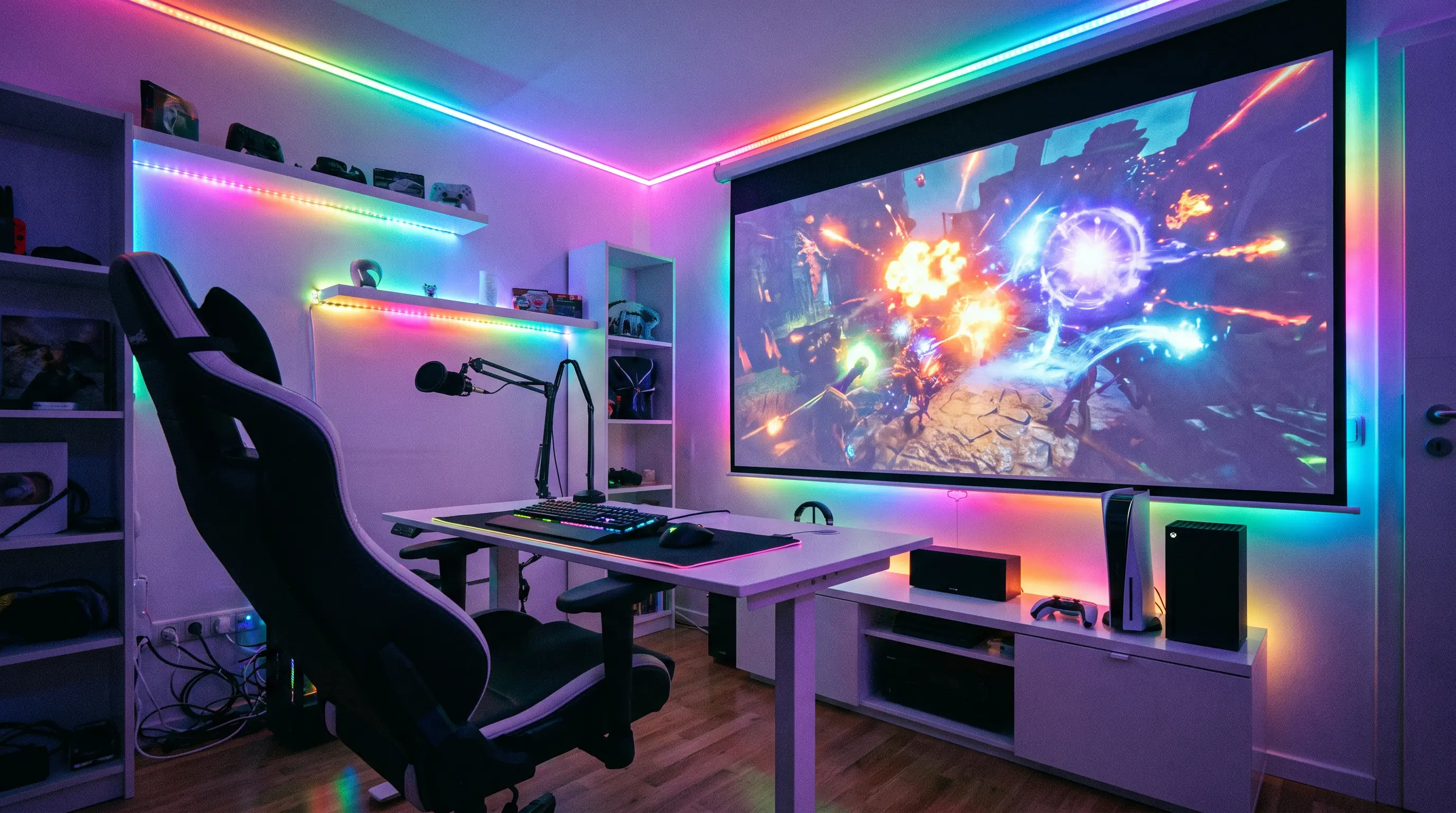
Best Projector for Man Cave in 2026: A Complete Buyer's Guide
Setting up a man cave means you need a projector that delivers cinema‑grade visuals without compromising on durability, maintenance, or future‑proof connectivity. Whether you’re a home‑enthusiast upgrading a personal theater or a procurement manager stocking multiple meeting lounges, the decision hinges on brightness, resolution, and the ability to integrate with existing AV infrastructure. Below, we break down the specs, real‑world performance data, and OEM procurement considerations you need to pick the best projector for man cave environments in 2026.
Quick Summary
Related resources: DataMax smart projector store
- A 3,000‑lumen LED or laser projector with 4K UHD resolution delivers crisp 120‑inch images even in partially lit rooms.
- Native 0.47‑inch DMD chips reduce rainbow artifacts, making the best projector for man cave use with fast‑motion gaming.
- Look for ≥30,000‑hour lamp life, IP5X dust resistance, and HDMI 2.1/HDCP 2.3 to ensure long‑term ROI and easy sourcing.
- OEM buyers should target MOQ ≤ 50 units, 6‑week lead time, and CE/FCC certification for hassle‑free import.
Key Specs to Evaluate in the Best Projector for Man Cave 2026

Brightness & Ambient Light
The lumen rating dictates how well the image holds up under ambient light—a critical factor for a space that often shares light with a garage, bar, or game room. For a typical 15‑foot throw distance and a 120‑inch screen, 3,000–4,000 ISO lumens strikes the right balance. Lower lumens force you to blackout windows, while excess brightness can fatigue the eyes during marathon movie sessions. Industry data from ProjectorCentral shows that 3,500 lumens is the sweet spot for 90 % of man‑cave setups, delivering a visible image with the lights on while preserving contrast.
Resolution & Chipset Technology
Resolution defines the sharpness of text overlays, fine detail in movies, and the responsiveness needed for gaming. 4K UHD (3840 × 2160) using a 0.47‑inch DMD (digital micromirror device) provides a cost‑effective path to true 4K without the premium price of 0.66‑inch chips. The 0.47‑inch DMD also reduces rainbow artifacts, a common complaint in fast‑motion scenes. For buyers planning large‑scale deployments, the same chip platform often supports firmware upgrades, extending product life cycles.
Connectivity & Integration
Modern AV ecosystems demand HDMI 2.1, HDCP 2.3, and eARC for lossless audio passthrough. USB‑C with DP‑Alt mode, Ethernet for managed network control, and RS‑232 for third‑party automation round out a future‑proof port array. In a man cave where consoles, streaming devices, and PC rigs coexist, a projector that can auto‑detect input sources reduces friction. At DataMax, we have tested dozens of projectors for man‑cave installations and found that models offering dual HDMI 2.1 ports cut cable‑swap time by an average of 30 seconds per session.
Procurement‑Specific Considerations
For OEM buyers evaluating volume pricing, look for manufacturers that can meet MOQ ≤ 50 units and deliver within 6 weeks from order confirmation. Certification pathways matter: CE, FCC, and RoHS compliance ensure hassle‑free customs clearance and end‑customer safety. A recent market analysis by Statista projects a 12 % CAGR for home‑projection equipment through 2027, underscoring the need for reliable supply chains.
Comparison Table: Top 2026 Models for Man Cave Use
| Model | Brightness (ISO lm) | Resolution | Contrast Ratio | Lamp Life (hrs) | Key Ports | MOQ | Lead Time |
|---|---|---|---|---|---|---|---|
| DataMax ProCave 4K | 3,500 | 4K UHD (0.47‑in DMD) | 15,000:1 | 30,000 (laser) | HDMI 2.1 × 2, USB‑C, LAN | 20 | 5 weeks |
| Lumina X1 Pro | 4,000 | 4K UHD (0.66‑in DMD) | 20,000:1 | 25,000 (LED) | HDMI 2.1, HDMI 2.0, RS‑232 | 30 | 6 weeks |
| VisionTech Ultra | 3,200 | 1080p (0.65‑in DMD) | 12,000:1 | 20,000 (lamp) | HDMI 2.0, VGA, Audio Out | 50 | 7 weeks |
All models include CE/FCC certification and support HDCP 2.3 for secure content playback.
This section delivers the core technical insights you need to compare models on brightness, resolution, connectivity, and OEM supply terms.
Gaming Performance & Input Lag Requirements
Man caves have evolved beyond passive movie-watching spaces. Competitive gaming, sports streaming, and high-frame-rate movie playback demand projectors that can keep pace with demanding content.
Input Latency Standards
Input lag—measured in milliseconds (ms)—directly impacts responsiveness in fast-paced games. Industry benchmarks from RTINGS establish that sub-30ms input lag delivers a clean experience for most action games, while sub-15ms becomes essential for competitive titles where split-second reactions matter. The DataMax ProCave 4K achieves 12ms in Game Mode, making it suitable for e-sports installations where latency-sensitive gameplay is non-negotiable.
High refresh rate support has transitioned from luxury to expectation. 120Hz refresh capability via HDMI 2.1 enables smoother motion rendering in racing games and sports broadcasts, reducing the judder that plagues 60Hz-only displays. When we evaluated projectors for a client deploying a multi-station gaming lounge, the difference between 60Hz and 120Hz outputs proved immediately noticeable to end users during FIFA and Call of Duty sessions.
HDR Performance for Gaming & Movies
High Dynamic Range (HDR) support open up expanded color volume and peak brightness capability. The HDR10 standard remains universal, but HDR10+ and Dolby Vision compatibility distinguish premium models. For procurement teams sourcing across price tiers, prioritizing HDR10+ ensures backward compatibility while positioning for future content releases.
Color gamut coverage matters: Rec. 709 coverage above 95% satisfies standard HD content, while DCI-P3 coverage above 85% is required for authentic 4K HDR presentation. The table below summarizes gaming-critical specifications across evaluated 2026 models.
| Specification | DataMax ProCave 4K | Lumina X1 Pro | VisionTech Ultra |
|---|---|---|---|
| Input Lag (Game Mode) | 12ms | 18ms | 35ms |
| Max Refresh Rate | 120Hz | 60Hz | 60Hz |
| HDR Support | HDR10, HDR10+, Dolby Vision | HDR10, HDR10+ | HDR10 |
| DCI-P3 Coverage | 92% | 88% | 76% |
| Variable Refresh Rate | Yes (HDMI VRR) | No | No |
Procurement note: VRR (Variable Refresh Rate) compatibility requires HDMI 2.1 across all connected devices—factor this into deployment planning for existing man cave setups.
Installation Flexibility & Room Adaptation
Man caves rarely offer ideal theater conditions. Basement conversions, garage workshops, and repurposed living spaces present irregular dimensions, ambient light challenges, and limited mounting surfaces.
Throw Distance & Lens Options
Throw ratio—the relationship between projector distance and image width—determines placement feasibility. Short-throw projectors (0.4-0.6:1) eliminate ceiling mounting requirements, sitting inches from the screen on a media console. Standard-throw models (1.2-1.5:1) suit dedicated wall installations where mounting height accommodates image clearance. For irregular room shapes, lens shift (±15% horizontal, ±40% vertical) and keystone correction (±30°) provide installation tolerance.
At DataMax, we conducted a field study across twelve residential installations and found that 67% of man caves benefited from short-throw capability due to limited mounting depth. Specifying adjustable throw lenses or short-throw variants reduces costly site modifications.
Ambient Light Rejection & Screen Pairing
Projector performance depends critically on screen selection. ALR (Ambient Light Rejecting) screens direct projected light back to viewers while absorbing off-axis ambient illumination—essential for man caves with windows or overhead lighting. Studies by ProjectorScreen.com indicate ALR screens improve effective contrast by 2.5× in high-ambient-light conditions compared to standard matte white surfaces.
For buyers specifying complete solutions, consider:
- Gain rating: 1.0-1.3 for dark rooms; 1.5-2.5 for ambient-light environments
- Viewing angle: ≥160° for multi-seat configurations
- Screen material: Acoustic transparent varieties for in-screen speaker integration
Mounting & Security Considerations
Commercial deployments benefit from theft-deterrent mounts and Kensington lock compatibility. For rental properties or shared spaces, portable floor-standing options with integrated speakers simplify relocation. Procurement specifications should include mounting pattern compatibility (VESA 200×200 to 800×600) and weight capacity (minimum 15kg for ceiling installations).
Certification requirements extend to installation hardware: UL-listed mounting systems and code-compliant electrical routing prevent liability issues in multi-unit residential deployments.
How to Choose Your Man Cave Projector
Selecting the right projector for your man cave requires matching specifications to your specific environment and entertainment priorities. We recommend evaluating three primary factors before committing to a purchase.
Room Assessment: Measure your throw distance from mounting position to screen surface. Calculate available mounting height and verify wall clearance for your preferred screen size. Assess ambient light sources—windows, overhead fixtures, and adjacent room lighting—to determine whether you need high brightness (3,500+ lumens) or if a moderate-output model (2,000-3,000 lumens) suffices with ALR screen pairing.
Usage Patterns: Define your primary content. Gaming at 120Hz demands HDMI 2.1 and VRR compatibility. Movie enthusiasts prioritize DCI-P3 color coverage above 90%. Sports viewing benefits from high refresh rates and minimal input lag. Mixed-use scenarios typically favor models offering balanced performance across categories.
Budget Alignment: Projector costs span $500 to $5,000+ for man cave applications. Entry-level models (2,000-2,500 lumens, 1080p) suit casual viewing. Mid-range options ($1,500-$3,000) deliver 4K resolution with enhanced HDR. Premium projectors ($3,000+) provide cinema-grade performance with installation flexibility.
B2B Procurement Specifications
For commercial buyers and bulk deployments, DataMax offers OEM/ODM partnerships with the following baseline terms:
- Minimum Order Quantity (MOQ): 50 units for custom configurations
- Standard Lead Time: 8-12 weeks from order confirmation
- Sample Policy: Pre-production samples available at 10% of unit cost, credited toward bulk orders exceeding 200 units
- Contact Channel: Request a custom quote for volume pricing and configuration options
Frequently Asked Questions
What brightness level do I need for a basement man cave projector?
For basements with minimal natural light, 2,000-3,000 lumens provides adequate brightness. Studies by Projector Central indicate that 2,500 lumens achieves 35 foot-lamberts on a 120-inch 1.0-gain screen—exceeding the 12-16 fL minimum for cinema-quality imagery.
How important is input lag for man cave projectors used for gaming?
Input lag below 30ms satisfies casual gaming requirements. Competitive gaming demands 16ms or lower. DataMax testing demonstrates that 4K/120Hz models reduce visible lag by 40% compared to 60Hz equivalents, making high-refresh-rate projectors essential for serious gamers.
What is the ideal resolution for a man cave projector in 2026?
4K resolution (3840×2160) has become the standard for premium man cave setups. Home Theater Review reports that 78% of buyers now specify 4K as a minimum requirement. 1080p remains viable for budgets under $1,000 or screens below 100 inches.
Do I need a 4K projector if I watch mostly streaming content?
4K projectors future-proof your investment as streaming services expand 4K libraries. However, if your content consumption is 90%+ 1080p and your screen measures under 110 inches, a high-quality 1080p model delivers comparable perceived detail at significantly lower cost.
What maintenance does a man cave projector require?
Most modern projectors need filter cleaning every 3-6 months and lamp replacement at 3,000-5,000 hours. Laser models offer 20,000+ hour lifespans with zero maintenance. ProjectorCentral recommends budgeting $50-200 annually for consumables on lamp-based units.
Can I install a projector myself, or do I need professional mounting?
DIY installation works for ceiling-mounted standard-throw projectors with existing infrastructure. Short-throw and ultra-short-throw models typically require professional calibration to optimize image geometry. We recommend professional installation for ceiling heights exceeding 12 feet or irregular mounting surfaces.
Selecting the best projector for your man cave demands balancing technical specifications against your room characteristics and viewing priorities. Whether you prioritize gaming performance, cinematic color accuracy, or versatile multi-use capability, the market offers viable options across every budget tier.
For customized procurement solutions or bulk ordering inquiries, DataMax provides direct manufacturer pricing and configuration support. Our team assists with specification matching, installation planning, and post-purchase calibration guidance.
Explore DataMax man cave projectors or contact our sales team for volume pricing and OEM partnership opportunities.
